Cool Machine by Colson Whitehead
/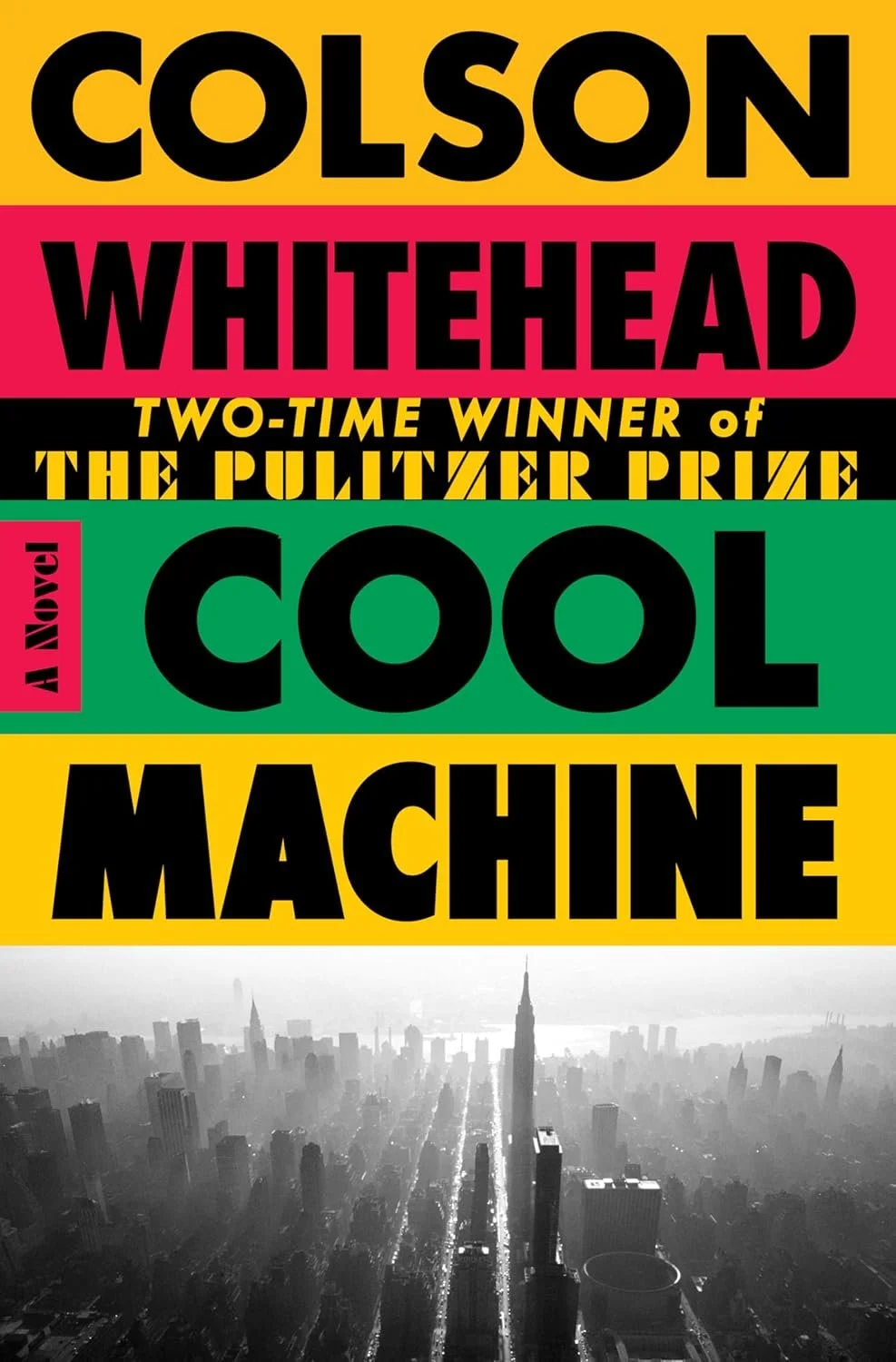
Cool Machine
By Colson Whitehead
Doubleday, 2026
If you enjoyed Whitehead’s first two crime novels in his Harlem trilogy—Harlem Shuffle and Crook Manifesto—you’ll probably want to read Cool Machine. But I wouldn’t recommend starting with it even though critics (other critics) are in full rave mode about it. If you do insist on beginning with Cool Machine, I can say that Whitehead strokes enough old information into the new novel so that it can stand alone. Actually, that should be “move alone” because Whitehead has upped the action quotient, replacing much of the charm of his up-from-nothing Black striver Ray Carney selling furniture to the middle class and into middle age with cinematic action and gouts of violent harm.
When I reviewed Crook Manifesto in these pages, I asked what would Toni Morrison have thought of double Pulitzer winner Whitehead’s shift from literary novelist to purveyor of local-color historical entertainments. In Cool Machine Whitehead seems rather defensive about his switch to genre fictions. Carney wonders, “Could crime be art?”—and answers himself: “If you were really good at it.” In “City at Night,” the first story in the trilogy’s usual set of three, Carney has long talks with “Uncle Rich,” a criminal mastermind back from his faked death to commit a complicated heist at the Waldorf Astoria that he says he will do “`For my art.’” Carney listens to the artistic thief because Carney has become an active (and unlikely) member of Uncle Rich’s crew. Too much of the story resembles Ocean’s Eleven material that requires tedious pages of Uncle Rich describing the elaborate set-up, the exposition before what he insists on calling the “execution.” Turns out that Rich is not just a “genius” artist but also a moralist, doing the Waldorf job to rescue Jesse Owens’ Olympic gold medal from rich white folks. The heist is clever but maybe not art.
In the second story, “Here Comes Sue Simmons,” the longest of the trio, the reflective Carney gives way to Pepper, the laconic and violent “muscle” who has helped Carney the fence out of previous scrapes. Now Pepper is an improbable jackleg detective assisting a group of well-intentioned thieves trying to steal back and then return to Africa looted art, in this case a Ngil mask. Pepper is old, slow of mind and slow afoot, but is still capable of movie moves that he needs to take out a much younger hit man (the first of two hit men in Cool Machine). This cool killer (called the “Melancholy Hitman”) thinks like an artist who occasionally likes to abandon his severe discipline and experiment with something “Flashy, flamboyant,” such as a defenestration. As in an action movie, Pepper has a final mano-a-mano face-off with the hitman (who cut off an earlier thief’s face). Pepper, down for the count—what will Carney do without him?—manages to gouge out the hitman’s eyes and recover the mask. This is not a spoiler because, given the conventional movement of Whitehead’s stories, the reader knows how it will end.
Carney returns in “No Radio,” and seems to have been influenced by the altruistic motives of Uncle Rich and Pepper. Decades ago, Carney failed to save the life of his ineffectual criminal cousin. Now Carney gets a second chance with that cousin’s son who is in trouble with the police and the Mafia—and is pursued by yet another hit man called “Rabbit.” Actual crime stories—the ones that get told at trial—often don’t have happy endings, but all three of Whitehead’s do, this last one a complete surprise to Carney and the reader.
“Art was a racket like everything else,” Pepper thinks, Whitehead implies. The mastermind “crafted the story [of a heist] to appeal to all quarters.” Carney makes money selling goods (stolen merchandise and the furniture) that his customers want. Whitehead seems to have learned from his consumer-conscious crooks. Only in the second story does he have a lawbreaker who disturbs his audience (and maybe some readers) with enigmatic political graffiti that may remind readers of Whitehead’s earlier literary novels. The tagger is even more altruistic than the other criminals because he is making nothing from his messages. Carney is called the “cool machine” but a more appropriate title for the book named for him—if William Burroughs hadn’t already used it—would be “Soft Machine.” While increasing the violence in this finale, Whitehead has also turned up the sentimentality with characters like those old proverbial (and movie) prostitutes with hearts of gold. In the final story, $200,000 worth.
In Cool Machine, a wacked-out moviemaker named “Zippo” returns from Crook Manifesto with moral purpose—to undermine the then popular movie The Gods Must Be Crazy because of its racism and colonialism. An ethical artist like Zippo might want to film Cool Machine because it has the justice-delivering third act of feel-good crime movies. Maybe Cool Machine is not exactly One Battle After Another but is still critical of the racism and corruption in America that drive some little guys to criminality.
What remains in Cool Machine despite all the violence and good will is some of the earlier novels’ historical background—the streets and shops and idiosyncratic street people Carney knew so well. But with the aging of Carney and Pepper, the old places and times often become sources of nostalgia, more sentiment. The downtown political corruption and exploitation of uptown Blacks continue, but Whitehead has his characters’ attentions focused elsewhere, on playing out dramatic plots or righting cultural wrongs.
What also remains are passages of Whitehead’s casually witty and sometimes penetrating style, but linguistic pleasures are also reduced as words are needed for the mechanics and machinations of plots—implied, unfortunately, by the title.
I’m mystified by Whitehead’s aesthetic or not so aesthetic choices in constructing Cool Machine. Maybe, stuck with the basically unchanging protagonists of the two earlier works, Whitehead believed that he needed to place them in more and more physically challenging and morally rewarding situations that happen to be—or were known to be—cinematic. Or maybe Uncle Rich has the answer. He says you do some jobs to pay “the Man” and some to make art.
Having read all of Whitehead’s earlier fiction, I was disappointed from the beginning with his genre trilogy. But perhaps I shouldn’t have been looking at Whitehead through Morrison’s presumably judgmental eyes. After Faulkner’s masterpieces, he wrote his Snopes comic trilogy about Mississippi horse stealers and barn burners. Faulkner never wrote another great novel. I still have hope for Whitehead.
Tom LeClair’s “Passing” trilogy stretched to five volumes. He has a Substack called “Monsterpieces.”