The Au Pair by Teddy Wayne
/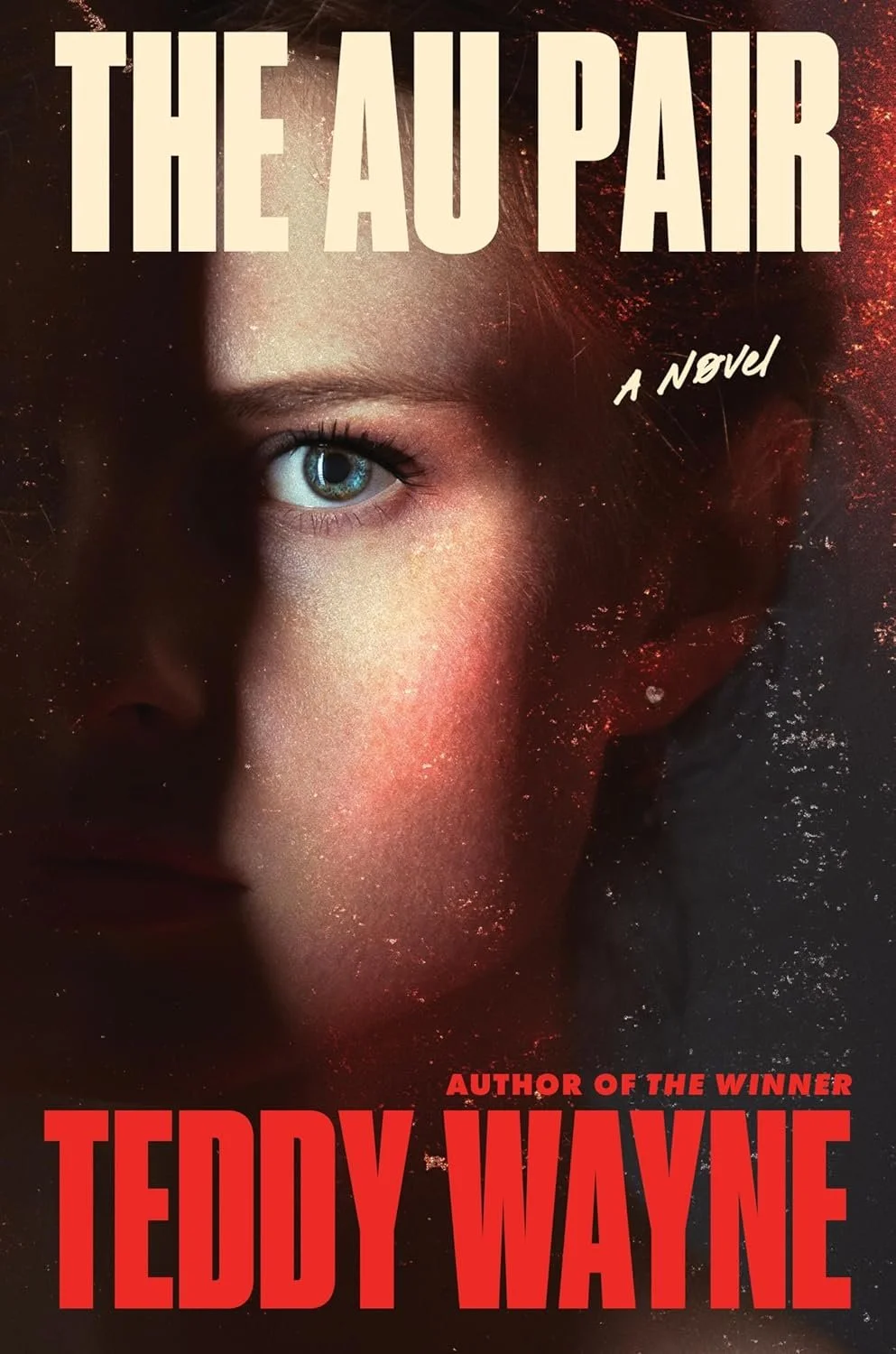
The Au Pair
By Teddy Wayne
Harper 2026
Teddy Wayne’s new novel, The Au Pair, has a strikingly simple premise that leads to a strikingly straightforward plot: a struggling writer named Steven Hammer is married to a corporate warrior named Lucy Myers and has two adorable little children, Caleb and Sophie. Steven rancorously teaches creative writing to undergrads brighter than himself, and he toils hopelessly on what he hopes will be his next novel, supplied with regular ‘stipend’ payments from Lucy and not exactly encouraged by his own agent, who tells him “the era of stupidly overpaying for literary fiction is pretty much done.”
Lucy authorizes Steven to hire a Norwegian au pair for the children Lucy herself hardly ever sees, and in due course Astrid appears, “a twenty-four-year-old with a thigh gap,” and in no time at all, Steven is enamored with the au pair and referring to Lucy as “the impediment.” The affair is boiling beneath the surface as the family takes a vacation to a cabin in the Catskills, where a more or less peaceful pattern emerges:
The family settled into a routine. Between decent writing sessions, Steven took the kids to the lake and on short hikes, played simple board games, and read to them. Astrid prepared all their meals and ate hers in the guesthouse. Lucy’s workout turned out to be even more arduous than expected, and dinner was often the only time she saw the children.
But when Lucy turns up dead and a dogged police detective named Hostetler takes up the case, things complicate for hapless Steven, and the novel proceeds to a trial. “Their shared accountant detailed the couple’s respective financial standing – and how, for over a year before her death, Lucy had given her husband a monthly allowance,” the courtroom learns. “The financial motive was established in terms a high schooler could understand.”
This is part of the problem with The Au Pair: it’s all done in terms a high schooler could understand. Readers familiar with Wayne from whip-smart novels like 2016’s Loner or 2013’s The Love Song of Jonny Valentine will take up this book, with its bland, commercially-friendly cover design and its seemingly straightforward movie-of-the-week plot and read in happy anticipation of the sharp ironic twist they’re sure is coming. There’s so much raw material here for such a twist, after all, from the few but skewering glimpses of Steven’s writing world to the always-fertile ground of loveless New York marriages.
But that payoff never comes. Instead, the book just shuffles along, doing only what’s predictable and resorting with depressing regularity to frankly bad prose. “The hosannas thrown her way that had once been for him and would never be again did gnaw at him some,” we’re told about Steven at once such point. “But her success turned him on and flattered him.” Neither the flat prose nor the rote plot ever actually does anything; the whole operation simply shows up between hard covers, either unaware of or indifferent to how derivative it all is. A cold, money-driven spouse? A schlubby, thwarted writer? A leggy nanny who might be either Snow White or Medea? An ambiguous death? A detective with a working-class surname? Little children who don’t seem to care who the Hell reads them their bedtime stories? Wayne can’t possibly be unaware of the fact that Jackie Collins and Jilly Cooper were writing this same book forty years ago, only with a hell of a lot more conviction. Here’s hoping he wasn’t stupidly overpaid.
Steve Donoghue is a founding editor of Open Letters Monthly. His book criticism has appeared in The Washington Post, The American Conservative, The Spectator, The Wall Street Journal, The National, and the Daily Star. He has written regularly for The Boston Globe, the Vineyard Gazette, and the Christian Science Monitor and is the Books editor of Georgia’s Big Canoe News