The House of Boleyn by Tracy Borman
/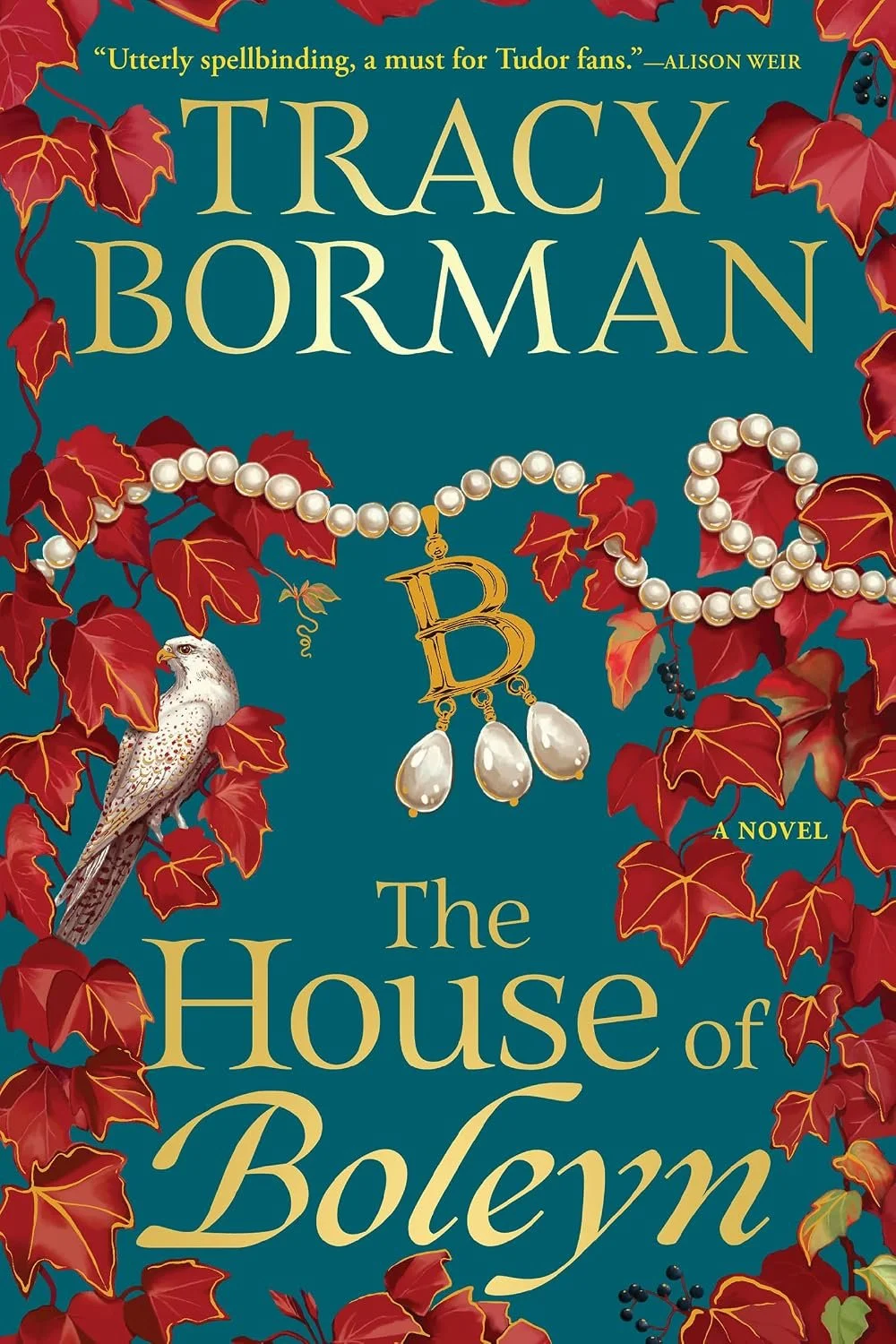
The House of Boleyn
By Tracy Borman
Atlantic Monthly Press, 2026
The story of Anne Boleyn’s rise to become the second wife of King Henry VIII – and her fall to become one of the two wives he executed – has been told and retold countless times. But just when you think no new angles could exist, along comes a novel like The House of Boleyn, which tells the larger Boleyn story from the point of view of their famous residence, Hever Castle. Centering the narrative around the manor gives author Tracy Borman the unassailable right to bring in many more points-of-view than the present-day rules would permit (authors are regularly instructed to keep narrators to one or two). Borman takes full advantage of that fact by upending many of the expectations of those narrators that her Tudor-focused audience inevitably bring to their reading.
The novel’s prologue gives us Thomas Boleyn mourning his children in the days after their executions before the main story flashes back to show everything leading up to that point. Since Hever Castle came into the Boleyn family with Thomas and left it when he died, this bookended structure suggests Hever’s own history. The particulars of Anne’s fall are scant at this stage – more important are the perfect contextual details that will foreshadow the upcoming narrative:
Until a few days ago, his daughter’s face had gazed down from the walls of almost every chamber in the sprawling palace. He had seen them being tossed on the pyre as he made his way to the Tower.
This prologue offers the first of the author’s recharacterizations, presenting Thomas as a doting and protective father instead of an overly ambitious one who happily led both his daughters into the King’s bed. Instead, Borman chooses Elizabeth Boleyn as the evil parent, plotting with her brother the Duke of Norfolk. Other changes are equally surprising: instead of centering Anne’s first love in Henry Percy, Borman gives us an Anne who offers her virginity to Thomas Wyatt well after Henry has appeared on the scene. Instead of a Jane Seymour pursued by Henry for only seven months, we see a predatory relationship begin a full year before that. And instead of a Jane Rochford despised by her husband and taking her revenge by testifying against him and Anne, we are given a lesbian in love with her royal sister-in-law (actually the most plausible of the flips):
Much as she adored her brother, Anne knew he must be vexing as a husband, with his restless energy, childish mirth, and wandering eye. And, in contrast to most other women of her acquaintance, her sister-in-law didn’t seem stirred by George’s boyish good looks or charisma. Well, it was no matter, so long as she bore him an heir or two.
Borman also capitalizes on lesser-known legends – including a child for George and Jane – and builds out Hever’s household with fictional but necessary characters that round out the story with an antagonist (Robert Cranwell, a steward), a love interest for Thomas Boleyn (Aphra, his mother’s attendant), and a confidant (Esther, Anne’s attendant). These are carefully explained in Borman’s Author’s Note, though her credentials alone could have justified the choices.
After all, Borman is a recognized expert in the Tudor field: she has spent more than a decade with Historic Royal Palaces, most recently as Chief Historian, and serves as Chancellor of Lincoln Bishop University. Her research and work have given her a deep well of historical facts and details that she uses to great effect throughout the novel. In all, The House of Boleyn is sure to delight the Tudor reader.
Janet Wertman is the author of the Seymour Saga trilogy. Her latest work of Tudor historical fiction is Nothing Proved, the first installment in her Regina trilogy, to be followed by What Love E’er Meant later in 2026.