A Private Man by Stephanie Sy-Quia
/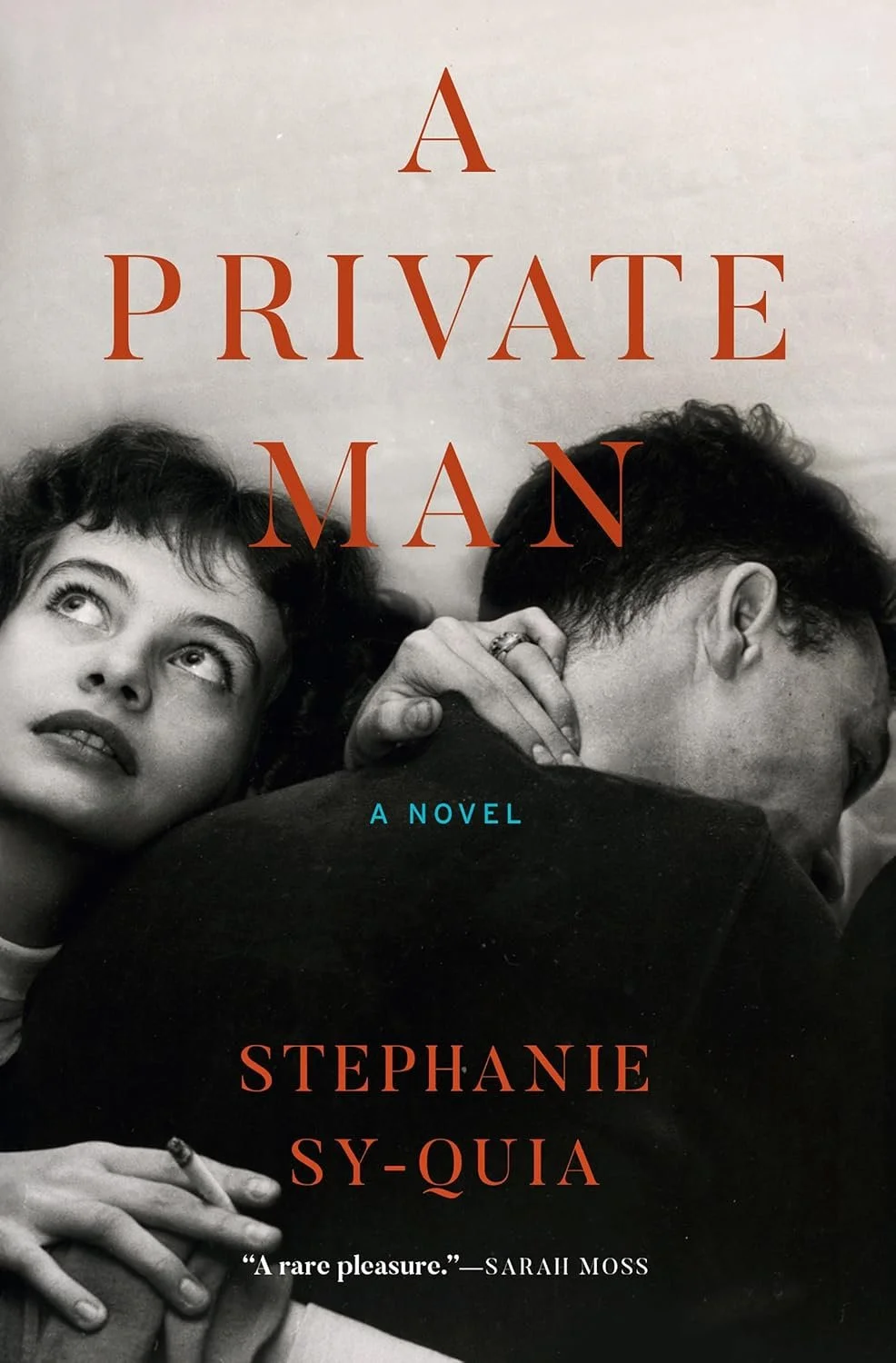
A Private Man
By Stephanie Sy-Quia
Grove Press 2026
Since the publicity material for Stephanie Sy-Quia’s debut novel A Private Man loudly announces that its core story is based on the true experiences of the author’s grandparents, thrice-burned readers will naturally dread the regurgitated pap such announcements generally signal. Those readers, skipping straight to the Author’s Note, for instance, will be horrified to find the dreaded line, “My grand-uncle really did say that to Archbishop Dwyer.” Everyone who’s ever been trapped in the slow page-turning agony of somebody else’s family photo album (or indeed 99% of all contemporary fiction published in the last 10 years, which amounts to the same thing) will expect the kind of “Granny always liked pomegranates” pointless swill that only Granny’s genetic descendants can even convincingly pretend to find interesting.
Fortunately, Sy-Quia avoids this trend, although she embraces another, the nearly-ubiquitous lure of the dual time-frame narrative. A chunk of her book is set in the early 1960s when her two main characters are younger and first meeting each other, and another chunk is set decades later in 2018-19 when one of those characters is old and frail and dropping cryptic remarks about what really happened in the other chunk. Modern writers of this kind of semi-historical fiction almost never seem to realize what most of their readers instantly see: that one of those halves is immensely stronger than the other and would have been further strengthened by simply absorbing it. Split time frames are useful almost exclusively for introducing a MacGuffin in the past and then paying it off in the present, and since it’s been about 60 years since any author could do that effectively, the device only hurts a book.
So too in A Private Man, where the present-day sections feature dear old Nana nattering on to her grandson about her torrid youth, juxtaposed against the 20th-century scenes where young Margaret Bendelow, a progressive teacher in the turbulent 1960s, is graduating from her teacher’s college and noticing the rift between traditional Catholic beliefs and the new freedoms being explored for women. Presented with such a rift, Sy-Quia upholds the age-old tradition of debut novelists by laying a heavy hand on the most obvious correlates:
She crossed the Tiber and looked to St. Peter’s, where at that moment, men of another century wee speaking about sex and love. The Patriarch of Antioch and All the East was taking his turn at the microphone (countered by Cardinal Ottaviani, Cardinal Tisserant, Cardinal Bea), saying: ‘Marriage should not be split into the primary aim of procreation, with loving companionship a mere secondary consideration. Should we not ask if some attitudes are outmoded, and, perhaps, the result of a kind of bachelor psychosis?”
Back in her room at the college, she washed her diaphragm and replaced it in its box.
She goes to a girl’s school out in the countryside, where readers can expect some Prime of Miss Jean Brodie antics and will duly get them, but they’ll also get something even more confidently predicted: she meets a man.
In this case it’s “shockingly, startlingly handsome” priest David Fletcher, who’s at first completely suited for the priesthood:
He liked being told what to do. He liked waking up knowing what he had to wear in the morning. He liked the awareness of himself as being in a hierarchy, with people above and below him. He liked all the secret codes and small rituals.
Margaret wants to jazz up the teaching curriculum, exposing the girls to St. Aquinas and St. Augustine, and David, “guardian to a millennia-old monopoly,” is hesitant. So you can just imagine how hesitant he’d be (to say nothing of the reaction of her own superiors at work) if he learned about what-all more she wants to teach those girls, especially when they get to the part of the Gospels where the Virgin Mary mentions that she’s never known man, which might stand as an invitation to a discussion about the birds and the bees, if your mind were so inclined. Margaret is confronted with a dilemma (the dilemma caused by this author’s rather playful relationship with English-language punctuation is another matter):
Margaret looked down at her hands. A choice now presented itself: give them the discreet, disjointed information, as she had been given; or right the wrongs of their ignorance, of her own as it had been handed to her, and tell them everything. She looked up again. Her students were twenty years old or thereabouts. They had come out of the convent schools of their towns, in so many cases the best schools in their areas. Some of them were born-and-bred Catholics; others like her: bright, and taken in by it all. If she told them, she knew, the hammer would fall hard upon her. Best to tell them, then, what no other would.
But right alongside this unfolding crisis, there’s another unfolding crisis: love. Margaret and David are falling in love, as young women and young priests have been doing since The Cloister and the Hearth with clockwork regularity. “All his life, he has been taught to yearn for eternity,” readers are told about David. “Yet here is this singular brilliance, consigned to a small span of years.” And here, where it matters most, Sy-Quia’s prose rises to the occasion, neatly capturing the near-delirium David feels:
She has gone down into the caverns of the holy writ, the chambers where iteration upon iteration of men have chipped away upon the walls in the dark, guided by the sounds of their own voices and the music their chisels make together. She has gone down to where they would not go, to where they had dug and dug no further because of the unruly mysteries they’d found. She went down into the deepest caverns where the waters waited, still and smooth and perfectly acoustic, and she had summoned them to surge.
Readers caught up in this drama will find themselves yanked away from it periodically by both the dumb little tics of contemporary fiction (no quotation marks around dialogue) and by dear old Nana and her idiot grandson. But the parts of the story that live really live, and that’s more than most debut novels manage to do.
Steve Donoghue is a founding editor of Open Letters Monthly. His book criticism has appeared in The Washington Post, The American Conservative, The Spectator, The Wall Street Journal, The National, and the Daily Star. He has written regularly for The Boston Globe, the Vineyard Gazette, and the Christian Science Monitor and is the Books editor of Georgia’s Big Canoe News