Departure(s) by Julian Barnes
/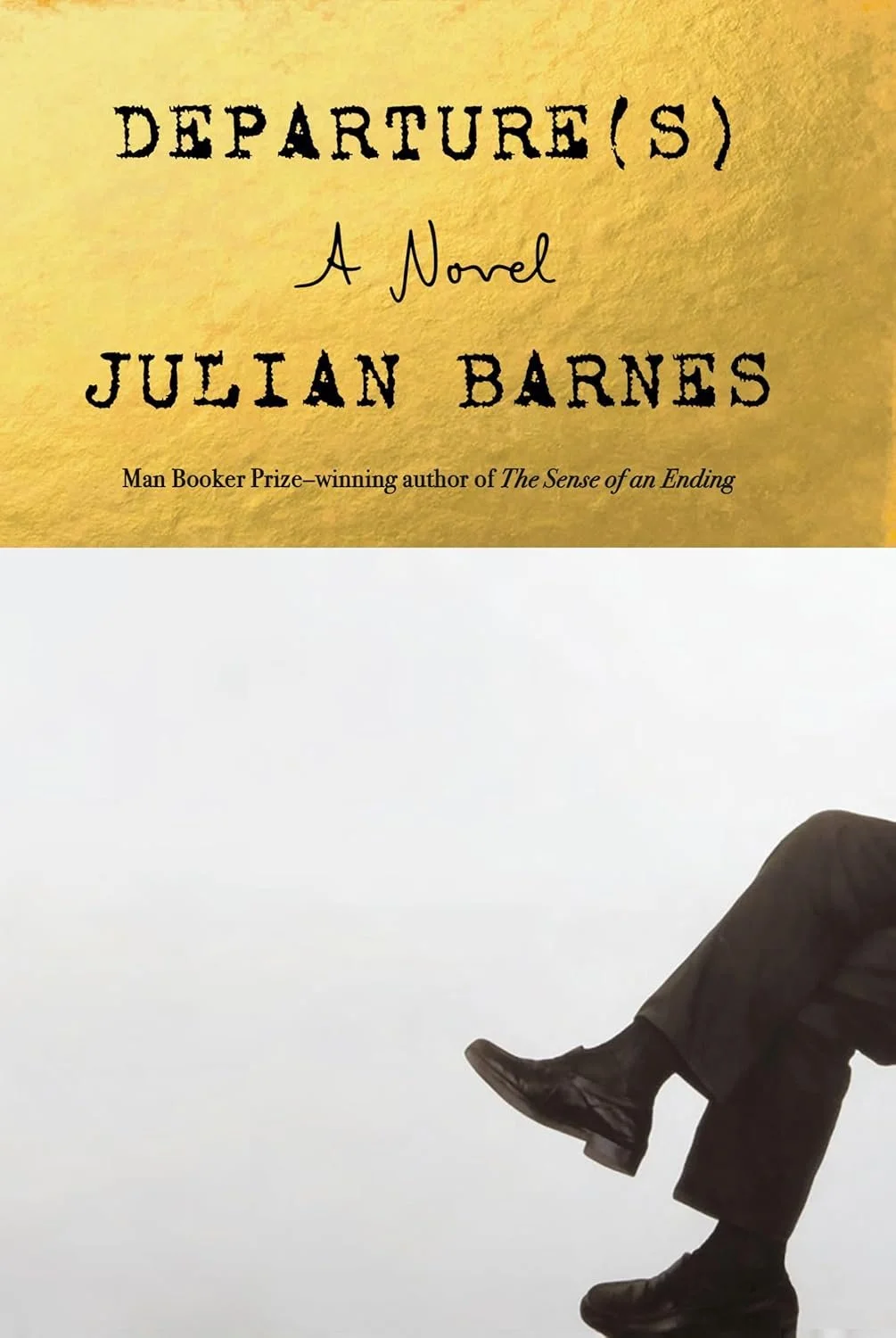
Departure(s)
by Julian Barnes
Knopf, 2026
In fifty years of reviewing books and in thirty years of writing novels, I have never faced the following dilemma: review a book that seems a double of one of my own or walk away from the aesthetic and moral issues a review would need to navigate. The book is Julian Barnes’ Departure(s), a novel that Barnes, now 80, says (within the novel) will be his last. I can say without fear that anyone who has been following Barnes’ long career (I have not) will surely want to read Departure(s). I can report that it has received some very good reviews, so I can also tell myself that readers of Open Letters may well want to know about it.
I will further confidently say that the novel will probably appeal most to readers age 60 and beyond who, like Barnes, are coping with memory loss, serious illness, the death of friends, and their own mortality. If you, like J. Alfred Prufrock, are measuring out your remaining time in careful coffee spoons, I can assure you that Departure(s) is short (160 pages), pithy, stoic rather than morose, sometimes humorous, lightly learned in its references to other writers. And like Sigrid Nunez’s award-winning death-dictated novel The Friend, Departure(s) also has a dog as a minor “character” that Barnes sympathizes with because the dog doesn’t know it’s a dog. The sympathy may be partly envy since humans are, presumably, the only animals that know from an early stage (possibly even in the birth canal, according to Otto Rank) that they will die.
Departure(s) is a hybrid, part memoir, part fiction—all narrated by, perhaps, an unreliable author. The autobiographical component of Departure(s) is probably true. Barnes says readers can Google the facts. But memoir shades into novel when Barnes tells the unusual story of two people he says were friends, a man and a woman whom he promised that he would never write their story. But he does now, which makes him unreliable. Barnes is, after all, a novelist and he needs a story, a plot, preferably one that would range over much of Barnes the memoirist’s life.
Jean and Stephen and Jules (Julian’s nickname as a youth?) meet about 60 years ago at Oxford where Jean and Stephen fall in love after being brought together by Jules, who might have preferred that Jean love him but takes pride and pleasure in his matchmaking. Jean and Stephen split up after Oxford, and Jules loses contact with them. Forty years later, Julian, now a well-known writer, gets a letter from Stephen, arranges a meeting, inquires about Jean, and the three get back together. Again Jean and Stephen become a couple and experience problems (told to Julian) that I won’t detail since the vicissitudes of the couple is, after all, Barnes’ somewhat flimsy plot that creates disagreements between characters and author.
It’s when Barnes is thinking about himself, who gets much more development than his presumed inventions, that Departure(s) has existential appeal, not with the raving of Tolstoy’s Ivan Ilyich but with Barnes’ understatement—his almost transparent neutrality when reporting what a rare disease is doing to his body—and with his common speech (contra, say, Heidegger’s jargon) when writing about death.
Management is a pervasive theme in Departure(s). Barnes tries and twice fails to manage his friends' lives. He can manage his cancer with debilitating chemotherapy treatments. He says that he once managed to get through traumatic grief by writing about it. It’s possible that the surprising calm of the writing in Departure(s)—all of it, memoir and fiction—is a managing artifice, self-comfort that, for a famous writer, naturally gets turned into a book. No one in the novel accuses Barnes of evading his consciousness of death, so readers are left to possibly see through Barnes and his managed narration without the aid of one of his characters. Since I value ambiguity and uncertainty in fiction, I respect Barnes’ cleverness, though readers may resent the novelist being a novelist.
An octogenarian like Barnes, I find I’m most interested in immortality-seeking novels I call monsterpieces, huge, information dense, deformed fictions, future Moby-Dicks. This kind of works doesn’t employ what has been called the “late style,” the stripped language and modest scale of, say, Don DeLillo’s short last novel, The Silence I admire Departure(s) because it brings some ingenuity to the late style and doesn’t attempt to pack into its brief space the kind of wallop that Big Books have. Most of “my” monsterpieces are American-made. I found it oddly pleasurable, despite the novel’s sad subjects, to read the fiction of an Englishman who in his subtle way brings that British “Keep calm and carry on” to the drama of looming death.
Tom LeClair is the author of four critical books and eight novels.