The Friend of the Family by Dean Koontz
/
The Friend of the Family
by Dean Koontz
Thomas & Mercer, January 2026
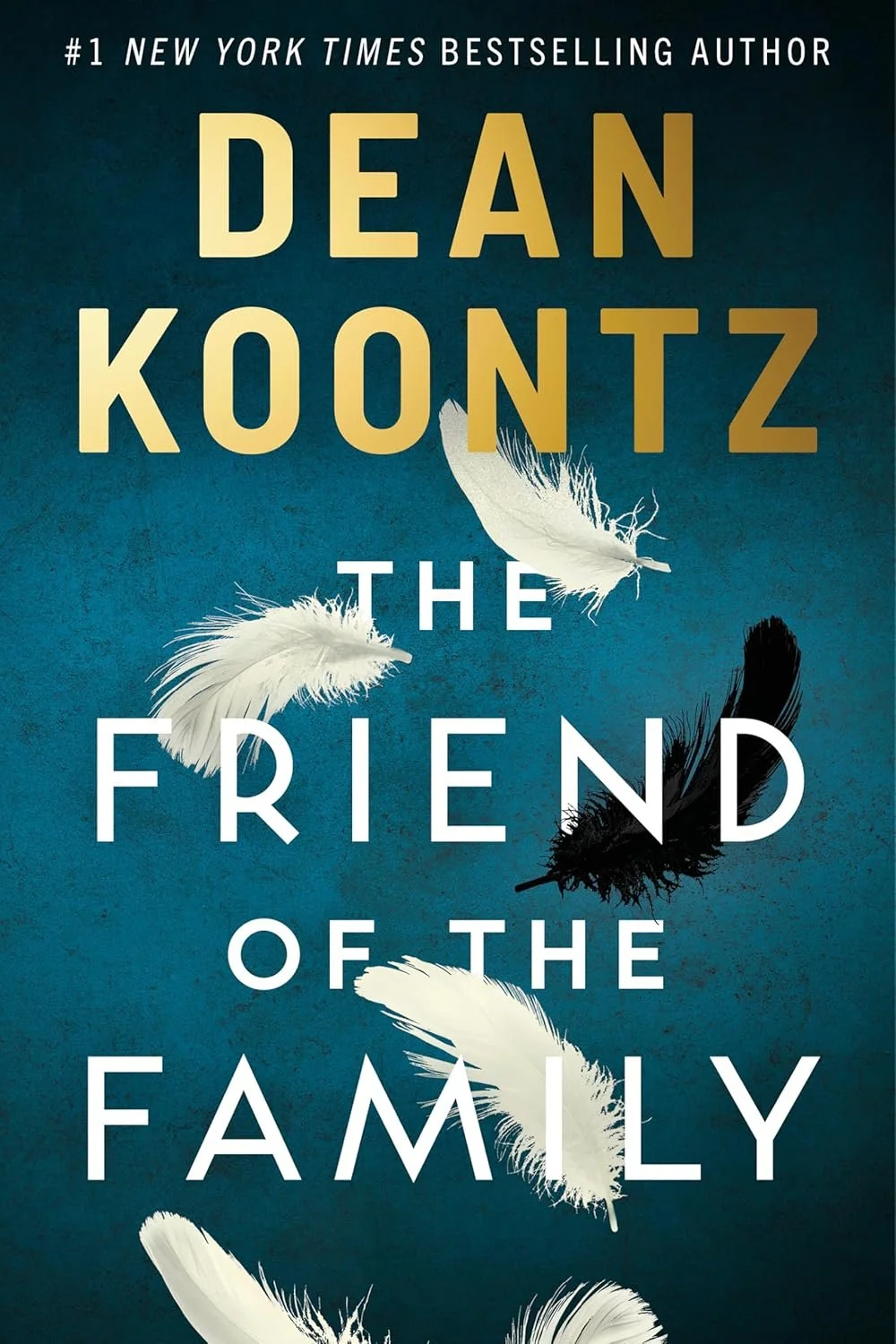
Prolific and best-selling author Dean Koontz, dubbed the "Dean of Suspense" by People Magazine and a "master of melding the supernatural with the commonplace" by the Boston Globe, returns with his latest effort: The Friend of the Family. Touted by the publisher as an historical fiction/coming-of-age story, his new novel is the story of young Alida, a Depression-era carnival freak who spends her childhood alternating between the cruel exploitation of her physical deformities by the evil Captain Farnham, and her wondrous, healing escapes into classic literature. Hers is a lonely life of resigned misery made somewhat bearable by the likes of Dickens and Dumas, London and Twain. Until, on an evening of particularly vile humiliation in a Southern California speakeasy, Hollywood power couple Franklin and Lorretta Fairchild witness the despicable treatment of the girl. They offer to buy her from Farnham, but he refuses to give up his greatest source of income. So the Fairchilds arrange an offer Farnham can't refuse, creating an enemy in the process, and take Alida back to their Hollywood estate to live in a peaceful, loving environment with their three precocious children and their eccentric, adorable staff.
After this setup, long-time fans and new readers of Koontz may find the middle section of the novel a bit befuddling, or perhaps disappointing, for different reasons: new readers may be put off by the sudden introduction of the supernatural, as it's not mentioned as a genre category or in the cover copy at all, while long-time fans may find it unsuspenseful and decidedly unKoontzian. One thing is certain, however: any reader sticking it out to the end will not be disappointed.
The Friend of the Family is a faux first-person memoir, written by Alida for her new-found family. It opens with that gripping introduction, but then it changes course. The aftereffects of that opening dwindle to periodic reminders of the lingering threat of Farnham, reminders that effectively link together a series of digressions, vignette-like passages that provide Koontz with an opportunity to expound on everything from the power of literature, to the music and films of the 1920s and -30s, to the life of a writer, to the themes of sacrifice, forgiveness, love, and the divine balance of luck. And, of course, one of his favorite subjects, dogs. In the hands of a lesser writer, this easily could have resulted in a hodgepodge of heavy-handed lectures, but with Koontz they serve as interesting and often moving episodes where the real purpose is to illustrate the growing love between Alida and her adoptive family. He muses eloquently on:
Books:
In those days, books were my salvation, a window on the fullness of life that I would never otherwise know. Indeed, books that remain so precious to me that I am unable to put into words how I feel each time that I open a new one to begin the tale it offers.
Sacrifice and generosity:
Every child deserves to be loved . . . it's a hard world, and there's not much any of us can undertake to make it right. But now and then there's a little thing that we can do.
The dangers of ideology:
I've never known any who surrendered their precious common sense to an ideology. But in my experience . . . a certain kind of person finds the academic world not merely prestigious but glamorous, a throne of power. They believe ideas are more important than people.
Dogs:
There must be dogs in heaven . . . because they're better than most people . . .
The relationship with a good dog is closer to perfection than that with another human rarely manages to be. [Dogs] are innocent, and we are not.
Writing:
At eighteen, nobody can benefit from being given writing advice. You have to kick your own ego around until it's scarred and dented, and then maybe you're ready for feedback.
Life and luck:
Enjoy life but stay alert. Always trust in the rightness of the world. But stay alert. Never be bitter or despairing. But stay alert. Life is a great gift. Love and mercy are the promise of it. But stay alert.
All those fears were errors of reason and faith. Luck was not evidence of frivolous Fates at play. Luck was what evolved for us from the actions of other people and from our own actions.
By the time one gets to the end of The Friend of the Family, one is sure to have fallen for Alida. Through her, one endures the wonderful highs and abysmal lows life can offer. It's an emotional journey that's never sentimental, and it earns every page of its unconventional middle. Long-time fans can take heart: At the end, Koontz switches gears and returns to his trademark style, along with a creative structural twist that writers are bound to admire.
Jim Abbiati is a writer, book reviewer, and IT professional living in Mystic, Connecticut. He's the author of Fell's Hollow, The NORTAV Method for Writers, and has an MFA in Creative Writing from National University. Learn more at https://jimabbiati.substack.com/