Silver Wolves by Jerome Charyn
/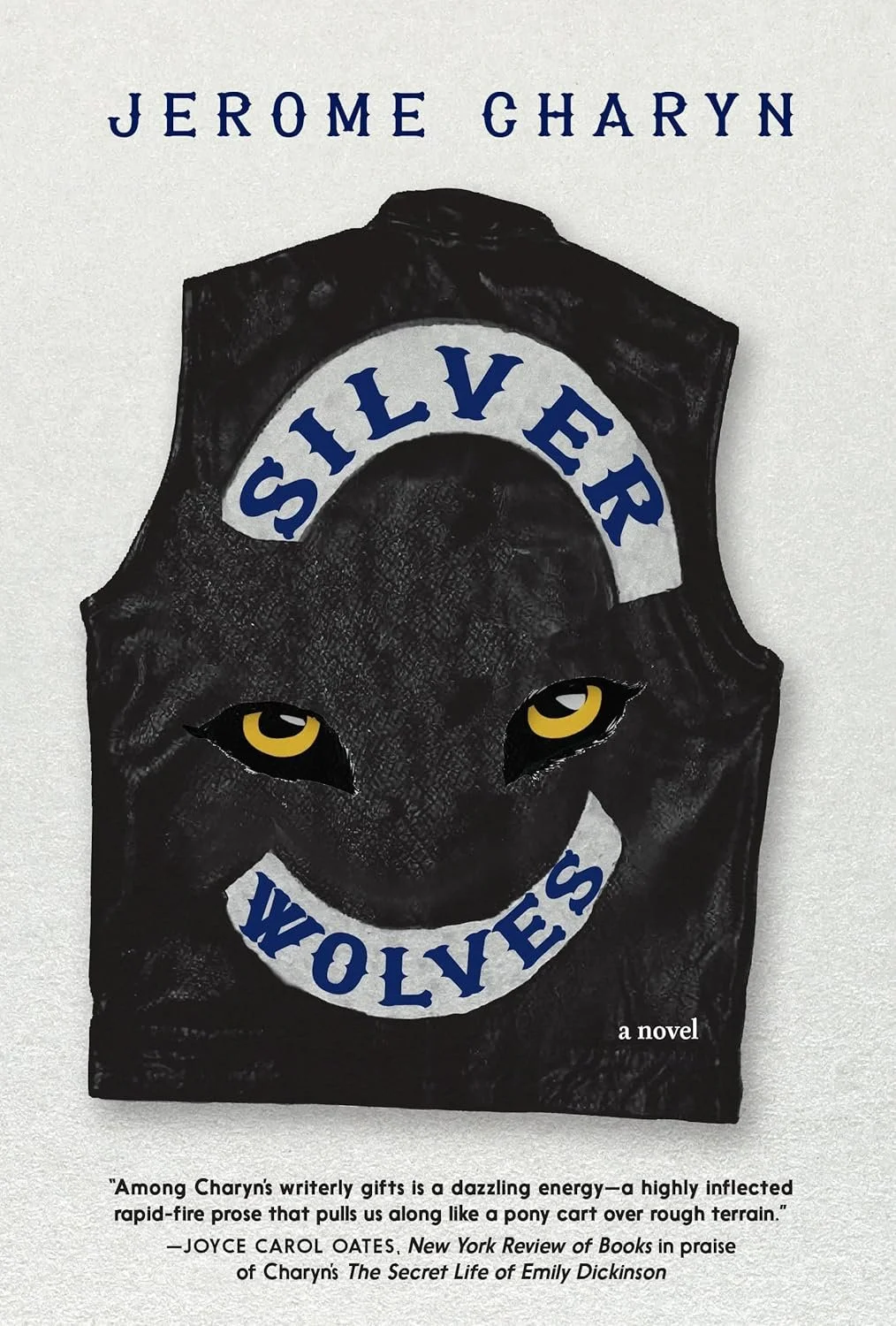
Silver Wolves
By Jerome Charyn
Seven Stories, 2026
What do young adult readers want? That’s what I wondered after finishing my first YA novel, Silver Wolves, described by the publisher as appropriate for 7th to 9th grade readers. No wait, my second YA novel, for I have read The Adventures of Huckleberry Finn many times, right up into the 7th decade of my life.
Another question: Do YA readers buy the books they want, or do parents or guardians buy the books they want and want their adolescents to want?
And lurking soon after, yet another question: what does Jerome Charyn, distinguished A (adult, art) novelist want with, at age 88, his first YA novel? Early in his career he published mostly sophisticated detective novels. In recent decades, Charyn has been publishing biofics about Washington, Lincoln, Teddy Roosevelt, Emily Dickinson, J. D. Salinger. Like these novels, Silver Wolves is historical: the 1950s in the Bronx. But the characters are not famous, not outside of their neighborhoods.
Charyn’s focus is the Salt family. They are not salt of the earth—a 20-something son, founder and former leader of the Silver Wolves gang, is serving a life sentence; his younger brother, Jonah, is in and out of “juvie” and a mostly failed gang leader; their father is in and out of an asylum; and their mother has almost disappeared into the two shifts a day she works to support what’s left of her family.
Charyn narrows in on Jonah during his early high school years, which Jonah narrates with something like faux naivete from an undisclosed point later in his life. Young Jonah is a charcoal sketch artist who becomes interested in reading as a sophomore and becomes a writer for and then an editor of his high school paper. Charyn, who also grew up in poverty in the Bronx, has said Silver Wolves is his most personal book. J. S. and J. C. (pronounced as an “s”). Like J. S., J. C. was initially interested in art and attended the High School of Music and Art. The book ends with J. S. still in the Bronx—unlike J. C. who goes off to Manhattan and Columbia, takes a Great Books course, and decides he’ll be a writer.
Charyn’s contemporary Don DeLillo wrote about, presumably, his own experiences in the Bronx of his youth in Underworld. He has several times remarked on his good luck to escape his constrained background and the borough. Silver Wolves is much about luck, just as Huckleberry Finn is. Huck escapes various “prisons” and is fortunate to be “adopted” on the river by Jim. Jonah is lucky to be favored by an English teacher, bailed out of trouble by a friendly cop, taken up by a wealthy Manhattan family, paid for his art work by a rich undertaker, saved from disfigurement by a matron in the juvie. At the end of Twain’s story, Huck and Tom spring Jim, who then saves Tom, shot during Jim’s escape. Tables turn. At the end of Charyn’s story, Jonah becomes a “savior” in ways that I won’t spoil but can say he saves some of his family and maybe his neighborhood.
If I had a new teen, I’d give him or her Silver Wolves, and then quiz them after they read it: “Do you see how lucky you are? And understand how luck can lead to gratitude and generosity?” Charyn would probably dismiss such boorish moralism, but isn’t that what YA novels do—introduce the empathizing process of reading fiction that leads to, perhaps, more sophisticated A novels? Books like The Catcher in the Rye, also about saving as I remember it. YA readers may not want this edification, so writers of YA novels have to be circumspect, and Charyn is.
Not only do I not read YA novels, this aged I even shies from coming of age novels. But I can appreciate why Charyn might write one, this one. In those historical novels I mentioned, Charyn is a great ventriloquist of people in a different time. I think his best is the book about Lincoln, I Am Abraham where the title suggests the novelist’s throwing of a voice. If the highly literary Charyn wants to use first-person to recall a version of his youth in Silver Wolves, he must take up the challenge of sounding like a ‘50s teen while still retaining what Charyn most values in fiction: “the music,” the artful use of oral discourse no matter how verbally limited a narrator may seem to be.
Twain got a lot of mileage out of Huck’s comic dialect. The dyslexic Jonah doesn’t have a large vocabulary, but Charyn almost never makes fun of Jonah, perhaps because, like Huck, Jonah is a great noticer of details—settings, others’ bodies, others’ work, food, the sounds and smells of Bronx streets. For the YA reader and for authenticity, Charyn keeps his sentences mostly simple and short, yet one occasionally hears the voice of an adolescent who might well become a novelist. Near the novel’s end, Jonah even does some lying (like Huck) and some fictionalizing, some embellishing like a mature Charyn.
Charyn probably knows from his years as a professor that readers brought up on screens are impatient with descriptions in books, so there’s little local color in Silver Wolves. But in the following passage about a cafeteria under the El, you can hear some wised-up, staccato “music”:
Everybody came to the Belvedere: housewives; socialists, who were prepared to save the world over a cup of coffee; retired cops; chess players, who held tournaments at a selected table; and all the lonely people who wandered out of the cold, with the bitter screech of the El in their ears and entered into a warm blaze of light and the sound of constant chatter.
If the purchaser of the Silver Wolves is reading along with the young adult, Charyn has some touches for the elder that the younger reader may not notice. The first of two parts is entitled “Portrait of the Artist.” Jonah and his girlfriend read Hamlet together, but Jonah doesn’t realize he is the “bashful prince” of the gang. Jonah also reads Ethan Frome and has heard about Hemingway. The crucial scene in the novel is Jonah’s brother, Michael, saving a grey wolf exhausted from swimming into the Bronx. He washes the wolf, and underneath the river soil and grey fur are streaks of silver—which give Michael the name of the gang he leads. The opening page of the novel describes the Bronx as grey, grey, grey. Underneath the grey, readers find, are symbolic streaks of silver, for the gang does good deeds in the neighborhood and prevents predatory gangs from moving in.
Other elements one might expect to find in thick literary discourse are left out of Silver Wolves. Some kissing but no sex. Little discussion of ethnicity and race. Religion is absent. Almost no psychological analysis or even implication. No obscenities, no DEI. Silver Wolves is ready for the school library. I don’t know about this, but If YA needs some sentimentality, Charyn provides with a major female character crippled by polio who offers Jonah a model of learning and pluck. If YA requires action, Charyn keeps the plot moving with concatenations of hard luck and good luck.
Jonah is not writing a YA narrative. If his partial autobiography has a literary model, it’s Ethan Frome, which Jonah says he has read 11 times. Perhaps from it he understood that a story can be about very bad luck. I think YA and A readers should feel lucky that Charyn is writing for both of them.
Tom LeClair is the author of four critical books and eight novels. He has been reviewing fiction for 50 years.