The Summer Boy by Philippe Besson
/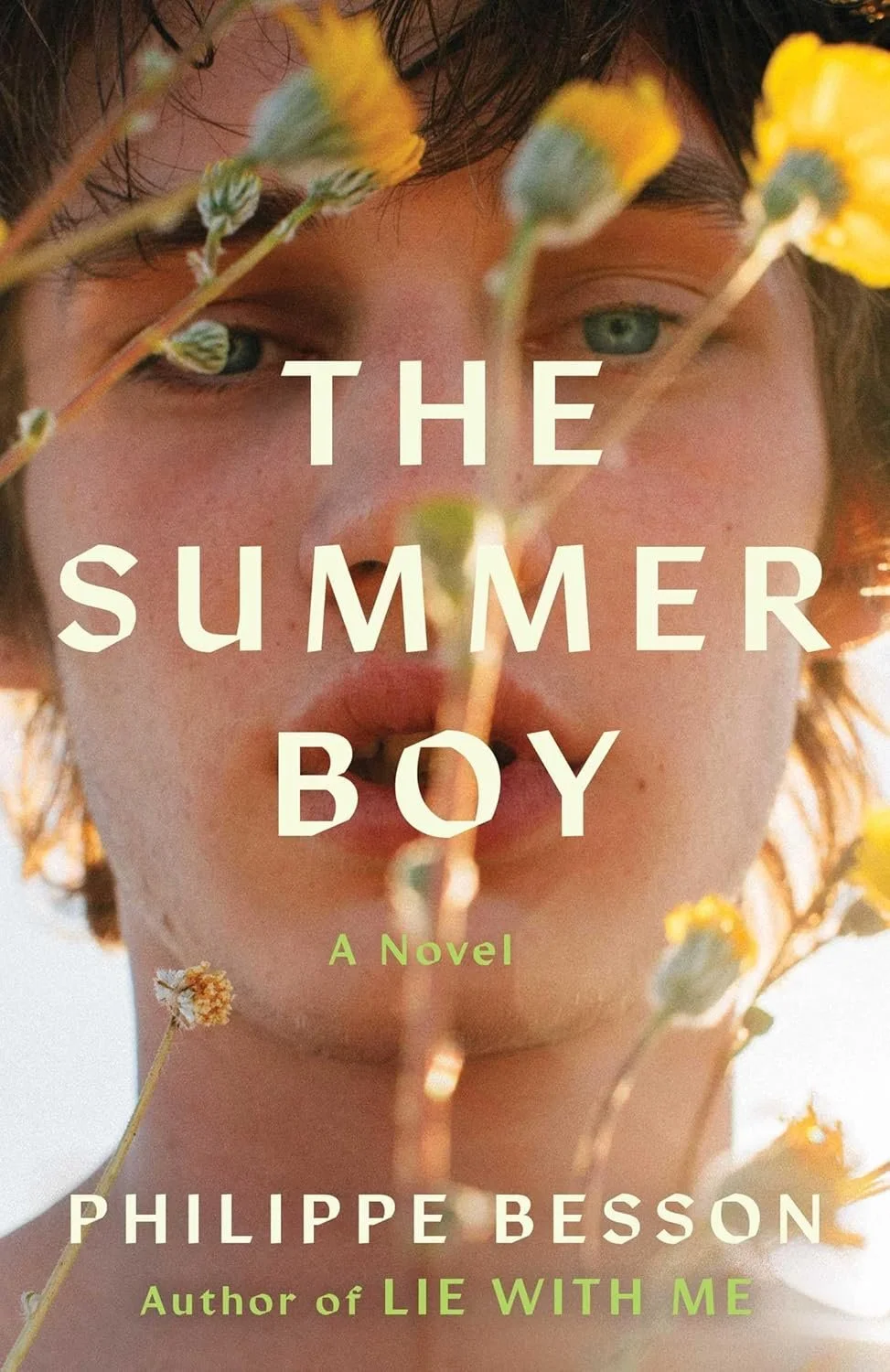
The Summer Boy
By Philippe Besson
Translated by Sam Taylor
Even in English-language translation (in this case by veteran translator Sam Taylor and thus likely to be accurate), the opening of The Summer Boy by Philippe Besson isn’t exactly promising. Quite the opposite: “that fateful summer” looms into view in the second paragraph. The cliches and lazy idioms follow thick as ticks throughout the book, but the persistent feeling is that Taylor isn’t to blame here (his translations of Laurent Binet, for instance, have all been extremely faithful). No, if readers feel a sticky pressure on the back of their neck, they need not consult a doctor; it’s just the heavy hand of the author.
The Summer Boy is Besson’s follow-up to his slight, winsome Lie with Me (translated not by Taylor but by Molly Ringwald), and it’s even slighter and winsomerer. It’s a summer story, framed by a writer named, of course, Philippe, who’s older and wiser and looking back at an idyllic summer holiday he enjoyed back in 1985 when he was lithe, eighteen, and gay in a laid-back way (none of the overwrought histrionics of Édouard Louis, gods be thanked). The younger Philippe takes a ferry to the island, meets up with his old friends Francoise and Christophe, and is introduced to a newcomer, slim, “feminine” (it comes up again and again, until it feels almost actionable) Nicholas, who’s been taken in by the group partly out of pity over his fractured family life.
The boys come together mostly to enjoy their summer sloth. They drink, they smoke, they hang around without anything to do, and the older Philippe recalls it with exactly the kind of sfumato tenderness that was so effectively employed in Lie with Me. “When I think about it now, it was wonderful, having nothing to do, being unproductive, simply drifting in languid inertia, with nothing to bother me, nobody to boss me around,” he reflects. “It was wonderful that, all of a sudden, my entire existence should have no purpose, no aim in sight.”
Even so, there’s at least one aim, the same aim that summer vacations have had since summer was invented: some context-free sex. Philippe’s buddies all yearn for it, and Philippe not only scores it with an athletic lout named Marc in a scene that’s a rather well-done fusion of nostalgia and physical comedy but also reflexively contemplates it with virtually every other young man he sees. But wafting over that element of the book is Nicholas himself, always slightly enigmatic, always a bit unreachable even as the younger Philippe increasingly wants to reach him. By the time Nicholas features in the only thing that passes for an actual plot development in the book, Besson may well have moved some readers to want to reach him too. In a book that’s mostly a napkin-thin reverie, that’s something.
But it’s not the main thing. The main thing, as mentioned, is the author’s heavy hand. At every turn, Besson ladles on the ‘if only, if only’ sentimentality. The author Philippe’s refusal to let sentimentality build naturally in his story is naturally equaled by the author-character Philippe’s refusal to let pass a single opportunity to wallow in it. “As I write this, I can see us very clearly in my memory: we’re both wearing denim shorts and faded baggy T-shirts. The image is precise. Stupidly, it makes me want to cry,” goes one of innumerable such passages. “Looking back, I can see how vacuous the day was. As if time had been suspended. The lull before the storm,” goes another. After a few of these, even energetically weepy readers will find themselves dreading these regular-as-clockwork eruption of sighing.
It can be presumed that this kind of syrupy sentimentality is more or less the point of a slight thing like The Summer Boy, and nobody currently does it better than Besson. But the suppressed adolescent tensions underneath the guazy narrative might make some readers a bit impatient for more substance. Winsome lose some.
Steve Donoghue is a founding editor of Open Letters Monthly. His book criticism has appeared in The Washington Post, The American Conservative, The Spectator, The Wall Street Journal, The National, and the Daily Star. He has written regularly for The Boston Globe, the Vineyard Gazette, and the Christian Science Monitor and is the Books editor of Georgia’s Big Canoe News