When We Were Briliant by Lynn Cullen
/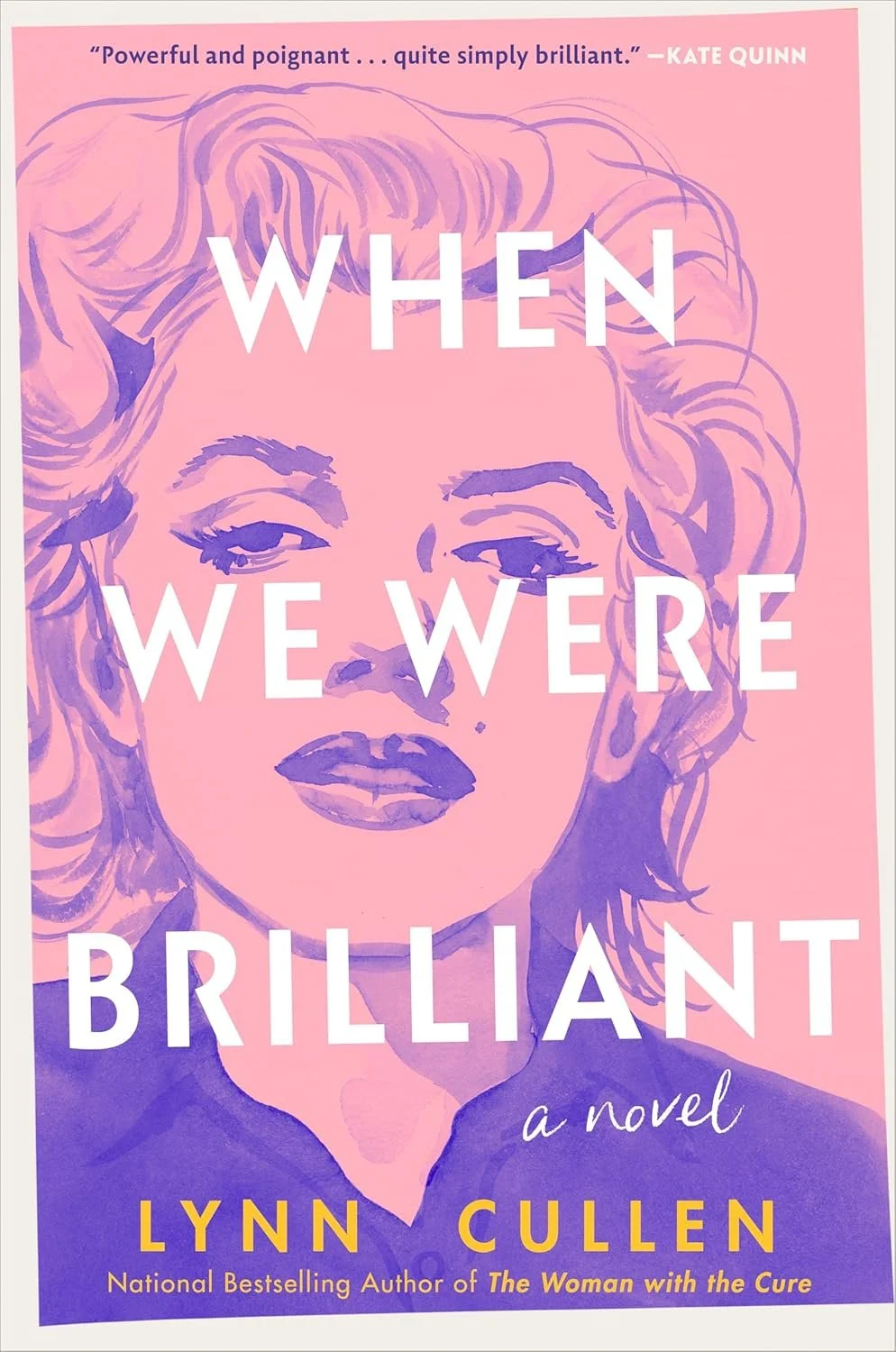
When We Were Brilliant
by Lynn Cullen
Berkley 2026
It is a truth universally acknowledged that Marilyn Monroe is and was a projection of her beholder’s fantasies. Whether those visions are salacious or revisionist, we all know how the story ends: America’s Hollywood Blonde, née Norma Jeane Mortenson, dies at the age of thirty-six from a barbiturate overdose in the privacy of her Brentwood home, to be perpetually mourned and endlessly commodified by a public eager to claim and consume her. In the decades since her untimely death in 1962, treatments of Monroe are often exploitative, feeling fictional, if not downright conspiratorial, even when they masquerade as factual. How do we responsibly talk about a woman who has no way to defend herself and who has become mythologized to the extent that she feels like a contemporary Helen of Troy?
When We Were Brilliant, the latest novel from bestselling author Lynn Cullen, presents an empathetic portrait of Monroe through the lens of acclaimed photojournalist Eve Arnold. Arnold entered the actor’s orbit in 1952, becoming not only a frequent collaborator but a close friend. The first female full member of the Magnum cooperative agency, founded by war photographer Robert Capa in 1947, Arnold was known for her ability to capture her subjects’ inner lives compassionately. Though she photographed the likes of Marlene Dietrich and Joan Crawford, Arnold was adamantly not a Hollywood studio photographer. Cullen’s novel explores how the photojournalist was cast as a “tiny terror” and “Mata Hari with a camera” thanks to her fearless coverage of politically charged figures.
Despite the intimacy and friendship Cullen foregrounds, Arnold struggled to reconcile the fact that “all my work, all my sleeping in yurts, eating of sheep brains, and witnessing atrocities and kindnesses had come down to one thing: I was Marilyn Monroe’s favorite photographer.”
As a Künstlerroman, a novel that foregrounds the creative awakenings and professional struggles of an artist, When We Were Brilliant is notable for its dual woman artist subjects: the actor and her photographer, the photographer and her subject. The novel excels in offering a window into a creatively symbiotic relationship, one where “we fed off one another until I couldn’t tell where I began and she left off.” Just as Monroe was dismissed for taking herself to be serious actor and investing in her craft at the Actor’s Studio, Arnold was routinely othered as a female photographer: “I take impossible shots, shots no one else can get— I mean, Capa couldn’t have gotten any closer—and still my colleagues think of me as a woman first and a serious photographer a distant second. I am never going to get past that.” The pair shares and evolves their artistic values as they traverse the enduring inequities that come with the territory of working in male-dominated fields, as well as profound personal crises, including failing marriages and recurring pregnancy losses.
While Cullen’s novel makes gestures at Monroe’s myriad romantic entanglements, including her short-lived marriages to Joe DiMaggio and Arthur Miller, Arnold takes pride of place as one of the “merry Marilyn makers” — trusted confidantes of Norma Jeane who helped bring Monroe to life. Cullen powerfully depicts how Monroe navigated her status as simultaneously beloved and reviled, as well as the personal negotiations that allowed her to continue living privately as Norma Jeane. The novel pushes back against popular narratives that Marilyn Monroe was a vapid studio construction, emphasizing Norma Jeane’s agency, wit, and strategic mindset in bringing the icon to life. As seen through Arnold’s eyes, “it was as if [she was] watching everyone, picking up bits from whomever, to build [her] Frankenstein’s bombshell upon the body of the feral Norma Jeane.” The photographs described in When We Were Brilliant capture her playful wildness. To best appreciate Cullen’s ekphrasis and convincing fictionalization of both artists, this is a novel best read in tandem with Arnold’s Marilyn Monroe: An Appreciation, recently revised and re-released by ACC Art Books.
When We Were Brilliant rehearses the questions about Monroe that we have never been able to definitively answer. Was Marilyn Monroe “an otherworldly being in a human’s body, or a human in an otherworldly body?” The novel concludes that “neither seemed an easy fit,” refusing to box Monroe neatly into the usual scripts. In doing so, Cullen resists the usual exploitative impulses and instead asks us to critically examine our own perceptions of the star and the cultural assumptions—for better and for worse—upon which they are based.
Gabrielle Stecher Woodward writes essays and criticism on the stories we tell about creative women. Her book reviews have appeared in publications including Harvard Review, American Book Review, and Necessary Fiction. Explore her portfolio at www.gabriellestecher.com.