1929 by Ross Sorkin
/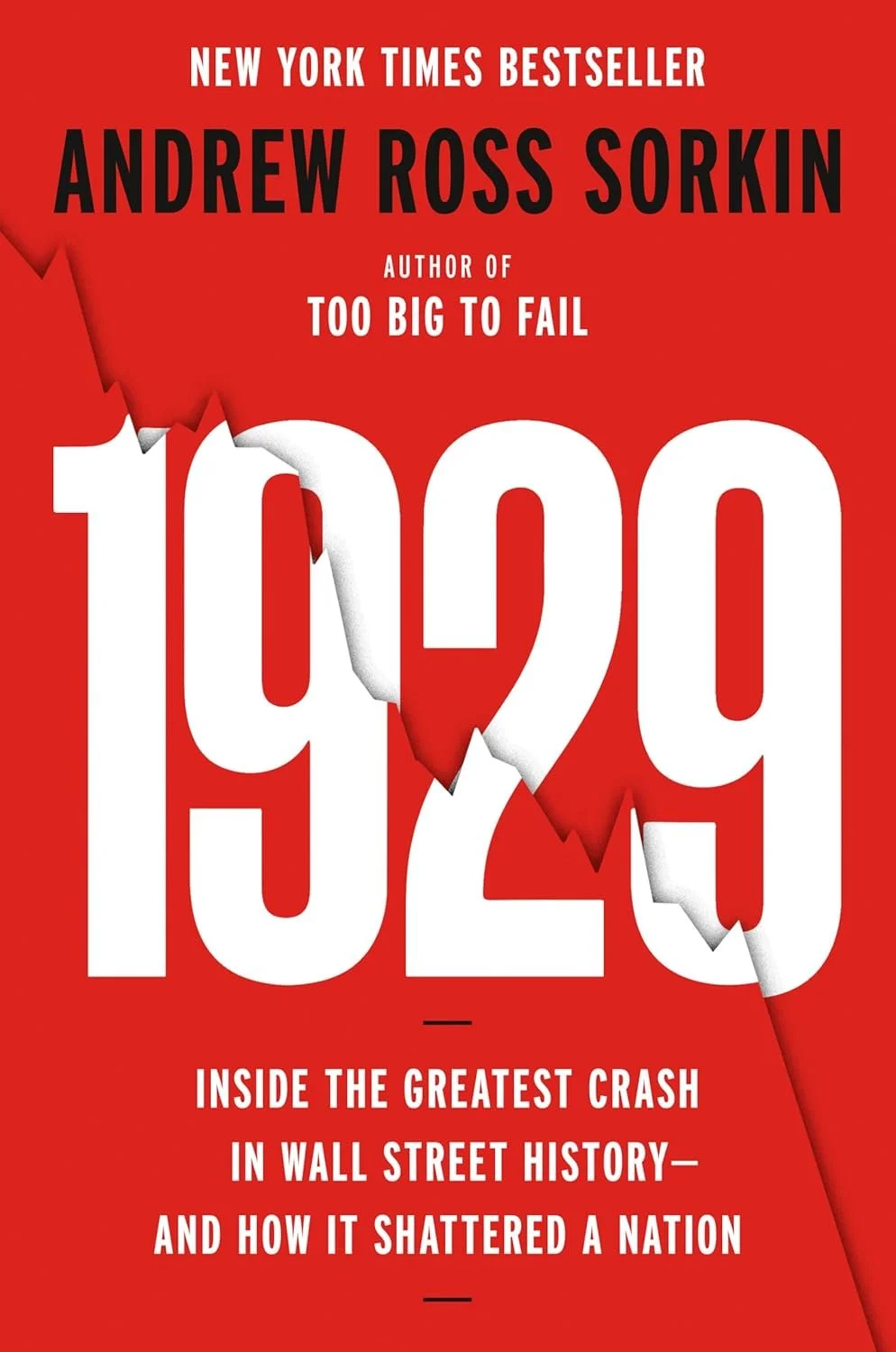
1929: Inside the Greatest Crash in Wall Street History – and How it Shattered a Nation
By Ross Sorkin
Viking 2025
The author of Too Big to Fail, Andrew Ross Sorkin, set his sights on another major financial disruption, this time the stock market in his new book, 1929: Inside the Greatest Crash in Wall Street History, and How it Shattered a Nation. The book meticulously details the events leading up to the crash, the harrowing week in late October and the economic fallout months and years later.
Although the crash has been well documented, Sorkin adds to the body of literature with firsthand accounts of the central actors. The breadth of the research is truly amazing from "private letters, transcripts, oral histories, architectural plans, memoirs, newspaper accounts, corporate filing" including extensive travel to universities and private archives plus extensive literature review.
By piecing together these various sources Sorkin methodically builds a story by exposing the internal monologues of the major players involved in the crisis. The narration is further maintained with mood-setting descriptions of the City and players (where they worked, how they dressed, etc.) under time-stamped chapter headings. Typical of what the reader should expect, here on the momentous day of October 24th, Sorkin, following the movement of Thomas Lamont Founder of the House of Morgan, writes:
Lamont was astonished when he arrived at his office to see the throngs gathered, their faces etched with anxiety. He made his way into the entrance of 23 Wall Street…. Safe inside the secured door, Lamont heard the thrum of a thousand conversations, people trading rumors.
The approach is very effective in ratcheting up the tension as Sorkin explains how finance leaders attempt to shore up the market with the strategic purchaser of stocks. These efforts were short-lived, as the Dow Jones continued to fall over several days. Looking back, the causes of the crash must be paramount in any serious analysis of the topic. The euphoria of the times drew investors, many inexperienced into the market. Speculation, in the form of margin buying and the related investment trusts, ultimately drove stock prices beyond their economic fundamentals. For a more robust explanation, consult John Kenneth Galbraith's The Great Crash 1929 but suffice to say the government-initiated separation of investment and commercial banks into separate entities starts with the investment trust debacle.
At times, the reading of 1929 was grinding, and more instances of Sorkin's direct voice, breaking away from chronological narrative, would have enhanced the reading. When Sorkin does this, he is at his most insightful, as when examining the reasons for the Great Depression:
The sharp decline in asset prices left precious little equity to cover great quantities of debt., eviscerating the credit markets. When there's no collateral that seems reliable, only the foolish lend. Credit, the lifeblood of the modern economy, was nowhere to be found. Americans didn't trust banks anymore; Money was pulled out of savings accounts and stuffed into mattresses. That really happened.
Part II of the book focusses on economic fallout in the years to come, Senate and Court hearings to lay blame and Senate regulatory reforms. With the seminal work by Galbraith and others, one may question the need for another book about the 1929 stock market crash. Does knowing intricate personal thoughts and detailed movements made by key players warrant the reader's attention?
Similarities between the Great Crash of 1929 and the sub-prime mortgage crisis of 2008 suggests that risks to the financial system will periodically emerge. Sorkin's book reminds us of two key attributes of both. Firstly, the Investment Trust of the 1920s built leverage through margin lending with subsequent selling to other Investment Trust and compares with sub-prime mortgage bundling and selling to others as means of transferring risk. Regulators do and need to be on the continued lookout and assess new products. The fact that risks may emerge outside of the regulated space is challenging but no less relevant for stability.
Secondly, albeit relatedly, is the hubris of people in power. Talking up the market and downplaying the risks to keep the status quo inflated the bubble and made its inevitable bursting much more impactful. Sorkin's research revealed details on players cutting sweetheart deals to friends. A focus on character or "who you know," as opposed to financial underpinnings, could result in risky business decisions. The Internal Audit department of financial institutions do and should continue devise tests to seek out risky behavior.
As a society we place a tremendous amount of trust in our business leaders and almost always they fulfill their roles in a responsible way. Trust? Yes. More apt may be to employ an old Russian proverb borrowed by Ronald Reagan in his dealings with the Soviet Union. That being trust, but verify. With so much at stake, you better believe it.
Robert Genier is a former Economist with the Canadian government with housing markets, housing bubbles, operational risk management and climate change science knowledge.