Beloved Disciples by Mario Elías
/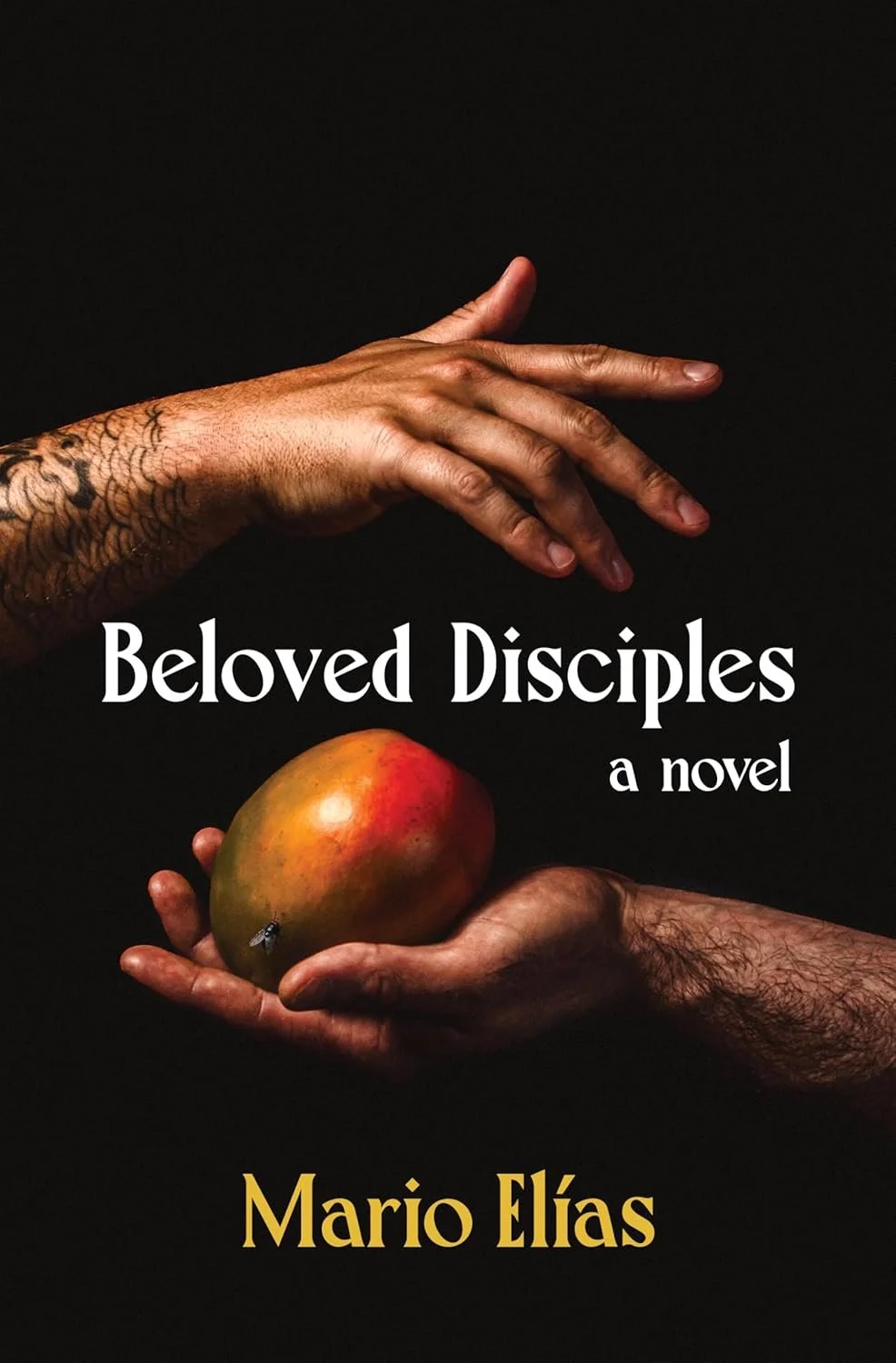
Beloved Disciples
By Mario Elías
Amble Press 2026
Beloved Disciples, the debut novel by Mario Elías, is the story of a young gay man named Simón, living a thwarted sexual life on a sultry, sea-soaked Caribbean island. Simón’s best friend Lenita (who’d been by his side “through every heartbreak, every disappointment, every moment he’d needed someone strong enough to absorb the worst the world could dish out”) laments that he’s the worst gay man she’s knows, inhibited, standoffish … until the wild night he spots a gorgeous young man at a packed dance club. Gazing at Albi, Simón enthuses, “He was a quiet wish. An inclination. Undulating fluidly, he moved effortlessly through the pulse of the music.”
The two fall in love instantly and quickly decide to build a life together, but Elías has an overlaying story to tell alongside this one: at the same time Simón is discovering Albi and falling headlong into the kind of intoxicating relationship he’s never even remotely thought to experience, he’s also mourning Albi in extravagantly emotional depth. Elías intertwines these two stories, these two timelines, with increasing intricacy as the novel unfolds, until at times the reader is in a giddy kind of superposition between ecstasy and pain. It’s extremely well done.
Grief-stricken Simón is more compelling than punch-drunk Simón, and since in 2026 all fiction is autofiction, this hints at dire chapters from the author’s own autobiography. In any case, readers could wish he’d shored himself up a bit more against the tidal pull of self-pity, particularly in its most familiar gay manifestation, camp. A few too many of Simón’s memories of Albi are overstated right to the border of being silly:
He held me draped over his arms, floating on the water’s surface. He was the Virgin Mary, and I was her son. Albi della Pietà. His monolithic arms, beaded with moisture, dwarfed me like some ancient tree roots surrounding a temple as he slowly spun us around. His chest was a hair-covered wall of stone, and I was chained to him, a willing Prometheus offering not only my liver but my entire body for all eternity.
When Simón isn’t doing this kind of thing, comparing Albi to the Pyramids or a two-for-one sale at Five Guys or the ears on Mickey Mouse, he can be quite compelling, either when he’s in his falling-in-love stage (quite nicely describing being in love as being “hyper-aware of everything all at once”) or, more movingly, when he’s been hollowed out by a grief he doesn’t know how to survive:
Light shines through the same window it did when Albi was here. The rays don’t dance anymore; they lie where they fall and roll across everything as the day moves forward. All I want is to grab the sheets, squeeze them in my fists until the fabric absorbs into my skin, and pull them over my head …
The people in Simón’s life, the ones who saw what he had with Albi and never leave him (which isn’t everybody, needless to say; what would a gay novel be without a blunderingly intolerant parental figure, in this case, daringly, the mother), consistently tell him that he will, in fact, survive, but again, Elías does such a skillful job at cross-hatching between a full heart and a broken one that even sympathetic readers (and by the book’s half-way point at the latest, they’ll all be sympathetic) will sense the bedrock futility of such well-meaning advice. They’ll just hope that Simón does his own healing.
“There are people who watch novelas,” a friend tells poor Simón at one point, “and people who star in them.” Beloved Disciples is ultimately about the uncomfortable truth of love: that the people who star in novelas pay a price, sometimes the highest price. From the sound of his brief autobiography – photographer, essayist, philanthropist – Elías is a busy guy, but readers can legitimately hope that anybody who could write a novel like this will someday write another.
Steve Donoghue is a founding editor of Open Letters Monthly. His book criticism has appeared in The Washington Post, The American Conservative, The Spectator, The Wall Street Journal, The National, and the Daily Star. He has written regularly for The Boston Globe, the Vineyard Gazette, and the Christian Science Monitor and is the Books editor of Georgia’s Big Canoe News