The Brothers McKay by Craig Johnson
/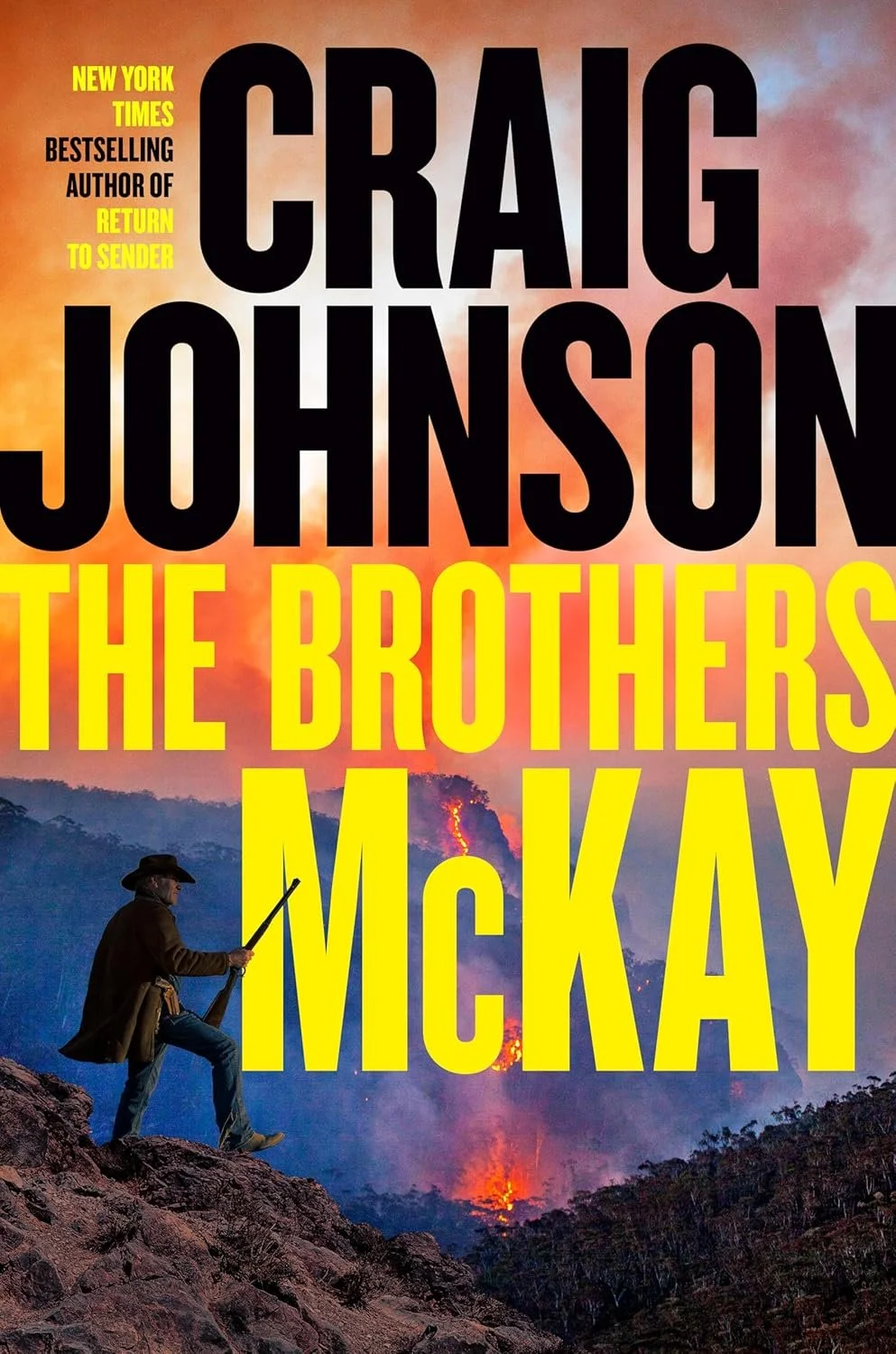
The Brothers McKay
By Craig Johnson
Viking 2026
Craig Johnson opens his immensely enjoyable new book, The Brothers McKay, with a charming story about how he ravenously consumed The Brothers Karamazov when he was a boy and then later told his patient father that anybody who couldn’t figure out the identity of the killer in the story had to be an idiot:
Taking the book from me, he leafed through the pages. “Do you remember the courtroom scene in chapter twelve?”
“Yep.”
“Do you remember the title?”
“No.”
He held it out to me. “ ‘The Court Makes a Mistake.’ Do you think that Dostoevsky was trying to tell the reader something like the character you think did it really didn’t do it?”
I took the book from him, staring at the chapter. “Then who did?”
He raised his hands. “We’ll never know, will we?”
This might be a classic bit of fatherly topic-baiting, but of course it won’t fly as a rubric for any self-respecting murder mystery. “We’ll never know, will we” specifically won’t work in the wild landscape of Absaroka County on the watch of Johnson’s marquee character, Sheriff Walt Longmire, who’s never shrugged his manly shoulders and said “Who knows” in his entire long career and isn’t about to start now.
The Brothers McKay opens with the death of Pepper McKay, one of the most despised men in the county. Only an author as confident as Johnson would preface the whole book with that autobiographical Brothers Karamazov teaser; it’s like he’s daring his readers to call it a spoiler.
Pepper McKay was hated, and he was found dead in Crazy Woman Creek, and he’s survived by a brace of sons, charismatic David, journalist Ian, and monkish Alan, plus a half-brother with a hair-trigger temper (“all fine young men,” says one interested party, not really hoping to be believed, “and none of them a murderer”). A second set of boot-prints was found alongside Pepper’s at the spot where the initial investigation suggests he fell into the creek, so Langmire and his trusty undersheriff Victoria Moretti naturally set about interviewing each of these sons and everybody else who saw the old man either the night before or the morning of his disappearance.
Part of the fun of The Brothers McKay (and it’s a hell of a fun book, just like Tooth and Claw, the novella that preceded it) derives from the fact that “everybody else” turns out to have been half of Absaroka County, maybe even including individual ranch horses. And since Pepper was a genuine monster, virtually all of these people had a motive to club him on the head and watch him pitch face-first into the creek.
Johnson sets up the half-brother as the obvious prime suspect and then unblinkingly removes him from the running, and the pacing of the whole narrative is as oiled and efficient as a well-maintained Winchester. The functional miracle of the book is enormous percentage of its length that consists entirely of dialogue (a wise choice on the author’s part, since it’s his greatest strength), and as usual in a Longmire novel, a small detail dropped mid-way turns out to provide the dramatic payoff at the climax. And amazingly, Dostoevsky doesn’t manage to spoil anything.
Steve Donoghue is a founding editor of Open Letters Monthly. His book criticism has appeared in The Washington Post, The American Conservative, The Spectator, The Wall Street Journal, The National, and the Daily Star. He has written regularly for The Boston Globe, the Vineyard Gazette, and the Christian Science Monitor and is the Books editor of Georgia’s Big Canoe News