The School of Night by Karl Ove Knausgard
/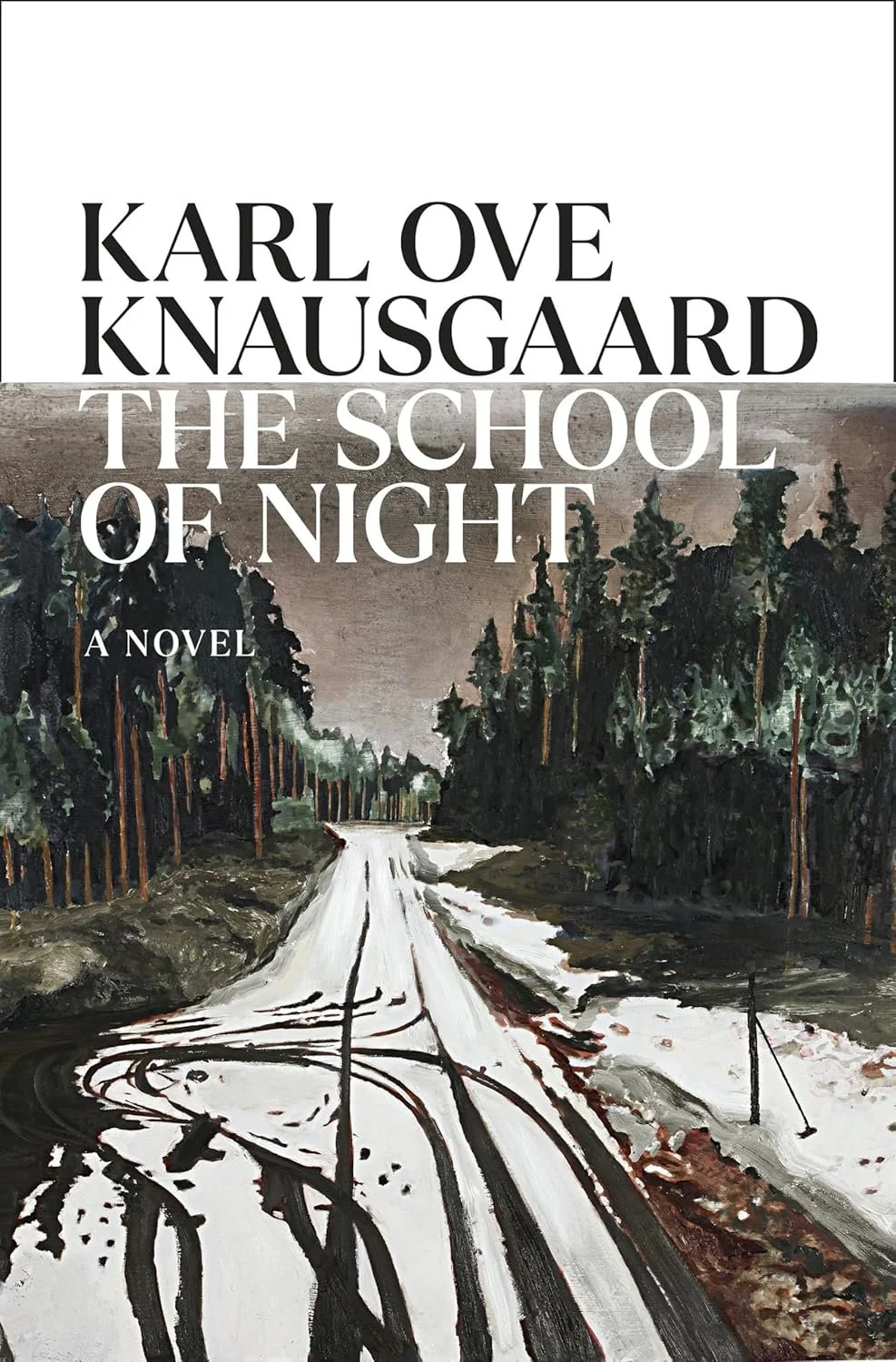
The School of Night
By Karl Ove Knausgaard
Translated by Martin Aiken
Penguin Press 2026
Still coasting on a meteoric rise following his self-indulgent six-volume biography, Norwegian sensation Karl Ove Knausgaard has only grown more prolific, producing roughly a book a year since 2018. Such a frequency is sure to delight adoring fans, but it risks a decline in quality. As the latest installment in his Morning Star series, The School of Night is a Faustian tale exploring the shadowy desires of an ambitious photography student. Delivering on his promise of prolificacy, Knausgaard drags readers through a bloated, sophomoric narrative that tests the limits of even his most loyal readership.
Told as a misanthropic, self-pitying suicide letter, the story is primarily set in 1985 and follows Kristian Hadeland, an insufferable young photographer attending an art school in London, the home of Elizabethan playwright Christopher Marlowe. Building on Marlowe’s Doctor Faustus and the dubious accounts of his death, Knausgaard lures his willing protagonist into a sinister dark bargain that invites evil and demands an inevitable price. The novel’s occult undercurrent enters the story through an eccentric Dutchman named Hans, whom Kristian meets early on but becomes inextricably entangled with after an unexpected murder threatens to stifle not only his artistic ambition, but his life entirely. Split into four parts, the narrative eventually jumps 24 years forward to 2009, where Kristian is previewing an exhibit featuring several of his acclaimed collections. The thrilling premise intensifies when the Mephistophelean figure and the dark secrets from his past reemerge from the shadows.
Death is a constant presence throughout the work, rendered through tragic fatalities and a baleful anonymous letter: “He who is dead is dead, and cannot be saved.” Knausgaard fuses the supernatural with bleak, vile acts of humanity that unsettle from start to finish, further amplified by a narcissistic narrator who is easy to loathe. Yet all of this is diluted by prosaic descriptions, one-note characters, and stilted dialogue. The protagonist is utterly intolerable—not merely for his profuse arrogance, misogyny, and insular worldview, but also for his complete lack of depth. In fact, every character’s next move is forecasted well in advance, including various sloppily written liaisons that happen at the snap of Kristian’s fingers.
Worse than the lifeless characters, consequential plot points—such as his deliberate estrangement from his family or his drug-addicted sister’s sudden death—are abandoned in ways that diminish the emotional depth of the work. Even an otherwise gut-wrenching death toward the end is reduced to cheap melodrama with rudimentary dialogue: “‘It’s not true. Say it’s not true.’ She buried her face in her hands and expelled a long, tortured sound.”
Although connected to the ever-expanding Morning Star series, The School of Night can be read as a standalone work. Dedicated readers of the earlier installments are likely to find pockets of value, having already committed themselves to the series, but new readers will hardly be convinced that Knausgaard is worth the hype. His inclusion of supernatural forces and references to famed occultists is promising but underdelivered, leaving one to wonder whether deadlines or rushed output may have limited its potential. Only time will reveal whether the series maintains its momentum or loses steam.
Brock Covington is an entrepreneur and writer. He can be found on the YouTube channel "The Active Mind" and on his substack: brockcovington.substack.com