The Shop on Hidden Lane by Jayne Ann Krentz
/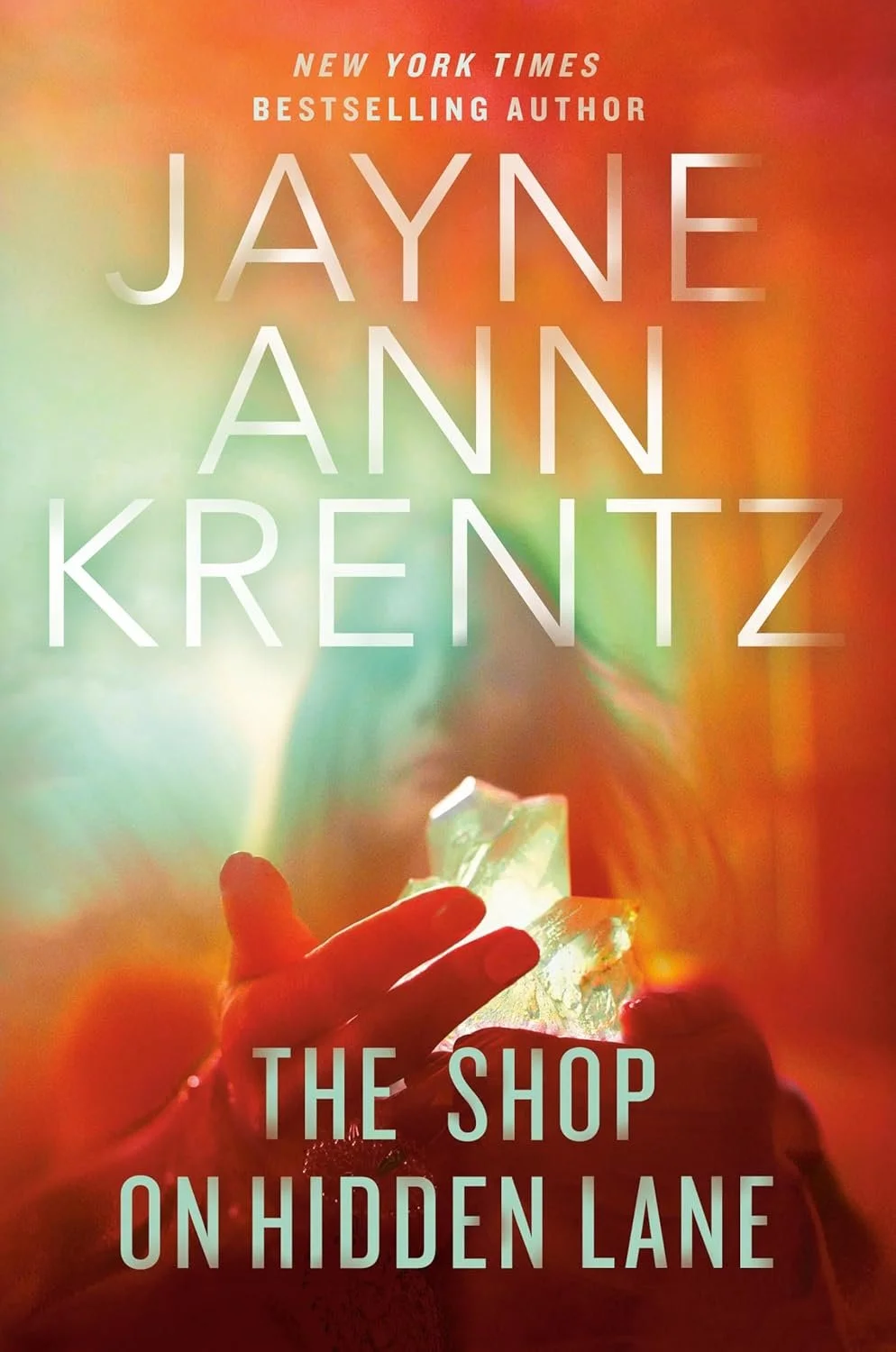
The Shop on Hidden Lane
by Jayne Ann Krentz
Berkley, January 2026
Jayne Ann Krentz is an award-winning author with well over a hundred books to her credit, published under various pen names across a career spanning 45 years. She's hit the New York Times bestseller list more than fifty times. Booklist once dubbed her "the leading mixologist of romantic suspense." Clearly Krentz is a successful, experienced writer. Her latest novel, The Shop on Hidden Lane, is a standalone paranormal romance-mystery-thriller that falls squarely in her wheelhouse. So the question here is, can she still deliver the goods?
The opening sequence of The Shop on Hidden Lane introduces two paranormally gifted families (Krentz's Montagues and Capulets) who have been feuding for several generations. Though enemies, they're bound by a mysterious pact to protect a dangerous secret. When a pair of seniors, a woman from one family and a man from the other, disappear from a cabin in the Arizona wilderness, a cabin that now radiates bad paranormal juju, their descendants are the only ones who can find them. Psychic crime scene cleaner Sophie Harper and soon-to-be-CEO-and-mandatory-hunk Luke Wells reluctantly team up and immediately the romantic sparks start to fly. Their investigation leads them on a puzzling search as they follow leads and red herrings. They fight off bad guys. They resist sumptuous temptations. They risk more and more until they arrive at an art colony built over a supernatural vortex, where every clue and every heartstring is tied off in a neat little bow.
Krentz's writing style is, not surprisingly, clear, concise, and competent. Her characters are varied and interesting and easy to like. Or not, as the case may be. She weaves her romance and mystery-thriller threads together artfully, and hits all the required beats with the ease of a pro. Her enemies-to-lovers and what's-actually-happening-here tropes are well executed, even if the obligatory romantic conclusion is a tad silly in 2026. She hides her hints adeptly and pulls off a few satisfying surprises. Her themes of betrayal, secrets, and forbidden love are always present and never hit the reader like a cudgel as they meander through the story. Krentz's tone is inviting and (delightfully) a bit deadpan, starting right from the prologue:
She came out of the trance on a crashing wave of adrenaline that flooded her veins with a euphoric sense of relief. Once again, she had survived the treacherous crossing that separated the dreamstate from the waking state. For a wild, glorious moment she was a sorceress, a queen, a goddess. There would be a price to pay, but the ice fever would set in later. In this moment she could almost fly.
She took off her mirrored glasses and waited for the artist's reaction.
He screamed.
She winced. "Please don't do that. It's very unnerving."
It was midnight and the alley was heavily shadowed but in the light from his phone she could see the artist's face. His handsome, dramatically sculpted features had been transformed into a slack-jawed, wide-eyed mask of horror.
"No," he gasped. He stumbled back a few steps, both hands stretched out in front of him. "Stay away from me. I know what you are."
"You said I was your Muse."
"You're a succubus."
He whirled and fled . . .
Though overall a smooth ride, The Shop on Hidden Lane does hit a few potholes along the way. The first being this prologue. Krentz masks the identities of the woman and the artist, then proceeds to immediately reveal the woman and her mysterious actions in the first couple chapters. And though the identity of the artist doesn't come until later, there's no reason it couldn't have been included earlier. So why make the opening scene a prologue instead of a chapter when the former implies a specific narrative necessity? This conspicuous, short-term information-hiding causes more head scratching than its potential suspense-building is worth.
An even deeper pothole shows up halfway through the novel when Krentz suddenly introduces a new point of view character. Not usually an issue, but in this case the fact that it happens at all uncovers a major mystery in the story. Instead of experiencing this revelation along with Sophie and Luke, as will certainly be expected, Krentz's abrupt shift drops it matter-of-factly on the reader’s head. Like a ton of bricks. The result is jarring, not to mention a little disappointing. It’s hard not to conclude Krentz at times relies on structural shortcuts at the cost of better writing.
That said, The Shop on Hidden Lane, despite its narrative bumps and jostles, is a warmhearted, entertaining romance. And an engaging mystery-thriller. Long-time Krentz fans are sure to enjoy it. Newcomers will find it an excellent introduction to her work.
And it certainly demonstrates Krentz can still write a good story.
Jim Abbiati is a writer, book reviewer, and IT professional living in Mystic, Connecticut. He's the author of Fell's Hollow, The NORTAV Method for Writers, and has an MFA in Creative Writing from National University. Learn more at https://jimabbiati.substack.com/